
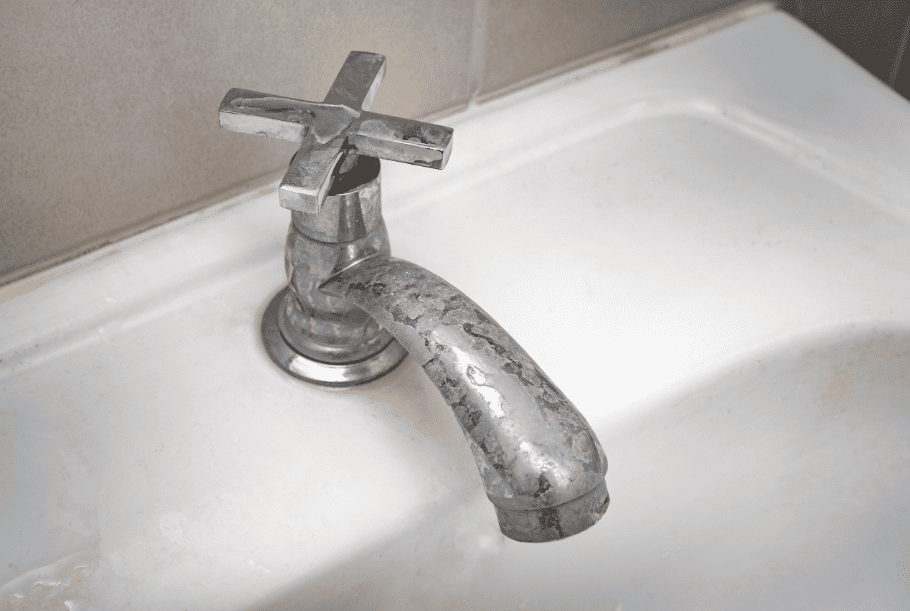
If you have noticed white crust on your faucets, spots on your glassware or a water heater that has started to rumble, hard water may be the cause. Hard water Missouri plumbing problems are common because much of the state sits on limestone, and water picks up minerals as it moves through the ground. Here is what hard water does inside your home and what you can do about it.
What Is Hard Water?
Hard water contains high levels of dissolved calcium and magnesium. It is generally not considered a health concern, but it can cause real wear on plumbing and appliances over time.
Hardness is measured in grains per gallon (gpg). A commonly used scale looks like this:
| Hardness level | Grains per gallon |
|---|---|
| Soft | Less than 1 |
| Slightly hard | 1.0 to 3.4 |
| Moderately hard | 3.5 to 6.9 |
| Hard | 7.0 to 10.4 |
| Very hard | 10.5 and above |
Hardness varies by utility and even by neighborhood. Your water provider publishes an annual water quality report that shows what is in your water, and it is a good place to start.
How Hard Water Affects Your Water Heater
Your water heater usually feels the effects first. As water heats, minerals separate out and settle at the bottom of the tank as sediment. Over time this can lead to:
- Popping or rumbling noises as water bubbles through the sediment layer
- Lower efficiency, because the burner or element has to heat through the buildup
- Longer heating times and less hot water
- A shorter lifespan for the tank and its parts
If your water heater is making noise, our guide on water heater popping or rumbling noises explains what to check. Regular maintenance, including flushing the tank, can help limit sediment buildup.
Effects on Pipes and Fixtures
Mineral deposits do not stay in one place. They can build up inside pipes, on faucet aerators and in showerheads. Common signs include:
- White or chalky scale around faucets and showerheads
- Reduced water pressure at certain fixtures
- Faucets that drip or feel stiff because of mineral buildup in the valves and cartridges
- Slow-flowing aerators and spray patterns that spray sideways
Mineral buildup can also contribute to leaks around fixtures. If you already see water at the base of a faucet, read about kitchen faucet leaks at the base and whether to repair or replace.
Appliances and Garbage Disposals
Dishwashers, washing machines and garbage disposals also work with the same water. Scale can build up on heating elements, clog small passages and leave spots on dishes. If your disposal is leaking, see our post on garbage disposal leaks under the sink.
Signs Hard Water May Be Affecting Your Home
- Scale or white crust on faucets and showerheads
- Spots on glasses and dishes after washing
- Soap that does not lather well
- A noisy water heater
- Hot water that runs out sooner than it used to
- Fixtures that wear out or need repair more often than expected
One of these signs alone does not prove hard water is the problem, but several together are worth looking into.
What Homeowners Can Do
- Check your water quality report. Find out how hard your water is.
- Flush your water heater. Ask a plumber how often is right for your tank and water type.
- Clean aerators and showerheads. Soaking them in vinegar can dissolve light scale.
- Consider water treatment. A plumber can talk through options for your home, based on your water, your household size and your budget.
- Do not ignore early warning signs. Small problems are usually cheaper to fix than a failed water heater.
When to Call a Plumber
If your water heater is noisy, your hot water is running short, or fixtures keep clogging with scale, our team can inspect your system and explain your options. Arch Plumbing serves homeowners across St. Charles County and nearby communities, with more than 60 years of master plumbers in the family.
Ready to have your plumbing checked? Make an appointment with Arch Plumbing or call (636) 299-3854.
Let’s Book Your Appointment
Fill out the form below and our team will contact you shortly to confirm your appointment.


