
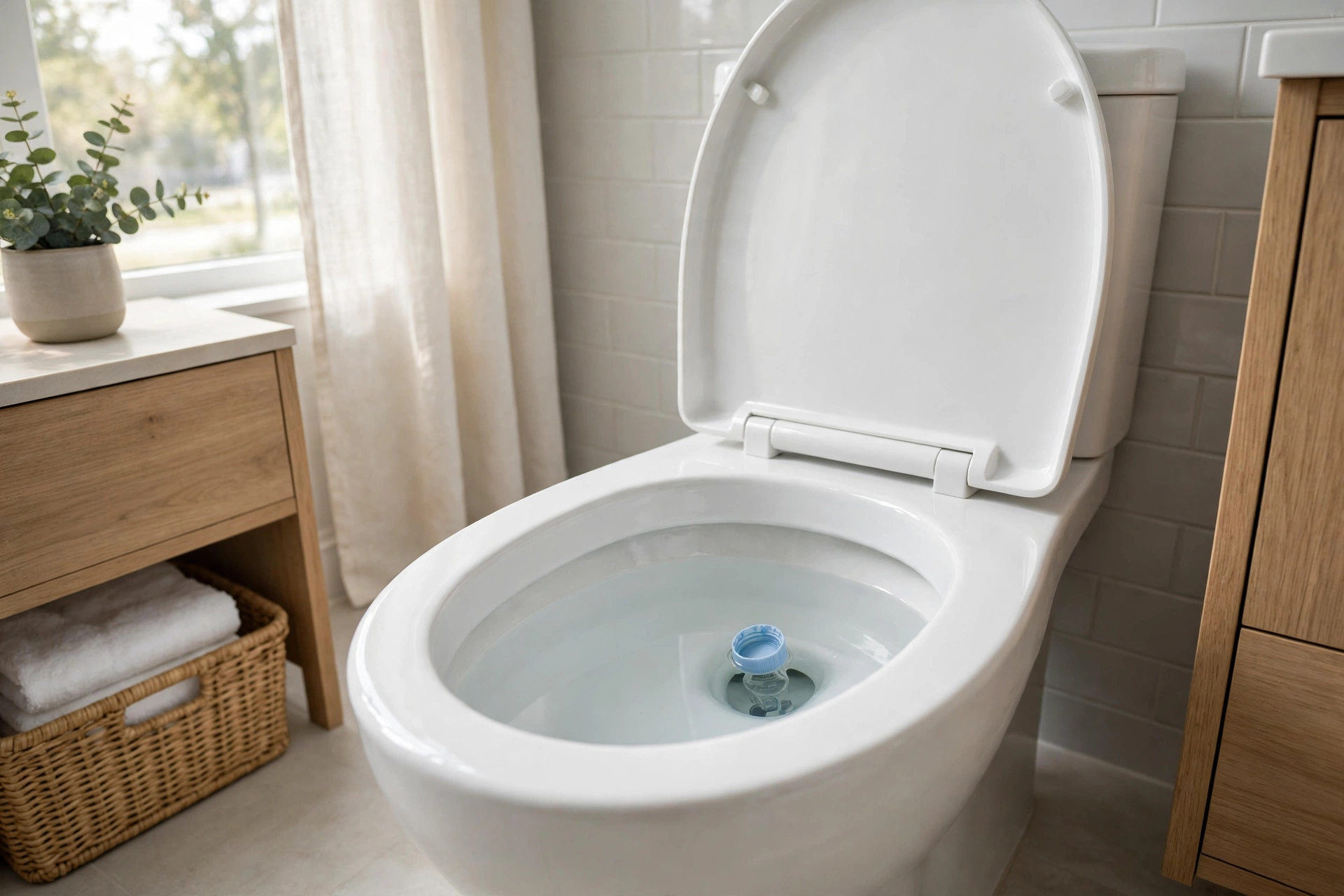
A ring slips off a wet finger. A toddler drops a toy car in the bowl and reaches for the handle. A phone slides off the counter at exactly the wrong moment. If you have just flushed something down the toilet that was never supposed to go there, the next sixty seconds matter more than most people realize.
The good news is that most flushed items can be recovered, and a toilet is a far more forgiving fixture than a main sewer line. The bad news is that the most common instincts, like flushing again or grabbing a coat hanger, are the ones that turn a simple retrieval into a clogged drain or a damaged toilet. Here is what we recommend, based on the calls we get from homeowners across St. Charles County.
First, Do These Three Things
1. Do not flush again
It feels natural to flush a second time to see if the item comes back up. It will not. Every extra flush pushes water behind the object and can move it further along the drain, and if the item is partly blocking the toilet, the bowl can overflow onto your floor.
2. Stop the water if the bowl is rising
If the water level is climbing instead of draining, lift the tank lid and press the rubber flapper down to stop more water entering the bowl. You can also turn the small oval handle on the wall or floor behind the toilet clockwise to shut off the supply. Either one stops the refill so you are not fighting an overflow while you work.
3. Look before you reach
Shine a flashlight into the bowl. If the item is visible at the bottom, put on rubber gloves and lift it out by hand. Many “flushed” items never actually leave the bowl. If you cannot see it, the next step depends on what it is.
What You Flushed Changes the Plan
Not all objects behave the same way in a toilet drain, and that is the part most generic advice skips.
Small, hard objects: rings, earrings, toys, bottle caps, phone
These are heavy and non-flexible, so they tend to settle in the trap, the curved passage built into the base of every toilet. That curve is what keeps sewer gas out of your bathroom, and it is also where hard objects usually come to rest. The item is often only a few inches from the bowl but out of sight and out of reach.
What to avoid: aggressive plunging. A plunger works by pushing and pulling water. On a small hard object, that pressure can shove it past the trap and into the drain line, where it becomes much harder and more expensive to retrieve.
Soft or absorbent items: wipes, cotton products, cloth, diapers
These behave very differently. They do not sink and settle, they swell and snag. Even products labeled “flushable” often fail to break down the way toilet paper does. A plunger is reasonable here, since the goal is to break up or move the blockage. If it does not clear after a few careful tries, stop and call a plumber, because soft items can catch on pipe joints further down the line and cause repeat backups.
Hazardous items: batteries, medication, cleaning products
Batteries can leak corrosive material inside your plumbing, so retrieving them promptly matters. Medication is a safety concern if children or pets can reach it, and it should not be in your wastewater in the first place. If anything toxic was flushed, or if a child may have handled it, do not reach into the drain or use chemical drain cleaners. Call a plumber and, if there is any chance of ingestion, contact Poison Control.
Why the Coat Hanger Trick Often Backfires
You will see wire hangers, drain snakes, and homemade hooks recommended online. We would steer you away from most of them for one reason: you cannot see what you are doing. A wire pushed blindly into the trap can wedge a small item more tightly, scratch the porcelain, or crack the glaze, which then collects buildup and stains. A standard drain auger can also scratch the bowl unless it is a closet auger designed for toilets.
If you want to try something at home, a closet auger used gently is the safer option, and only for soft or lodged items. For small hard objects, the more reliable approach is simply to stop and let the right tool do the job.
When to Stop and Call a Plumber
Call us if any of these apply:
- You cannot see the item and a gentle attempt did not bring it up
- The toilet is draining slowly, gurgling, or will not flush after the incident
- The item is valuable, sentimental, or electronic and you want the best chance of getting it back
- Water is backing up into a tub, shower, or other drains in the house
- The item was hazardous or may have been handled by a child
- You are on a septic system and are not sure how far the object could travel
How a Plumber Gets It Back Without Wrecking Anything
For most flushed objects, a plumber has two clean options. The first is to remove the toilet from the floor, which takes less time than most people expect. With the toilet turned over, the trap is fully visible and the item can be removed directly. The toilet is then reset with a new wax ring and sealed, and the bowl is tested for leaks.
If the object has moved past the trap, a plumber can work on the drain line with professional drain equipment instead of guessing or cutting into anything. Either way, the goal is the same: get the item back, and leave the toilet and pipes intact.
Does It Matter If You Are on City Sewer or Septic?
Yes, a little. On a municipal sewer line, a small object that passes through the toilet will usually travel with the flow, and the concern is whether it catches on something along the way. On a septic system, solid objects can settle in the tank or reach the outlet baffle and cause problems that show up later as slow drains or backups. This is more common in homes outside city limits, including many properties in Warren and Lincoln County. If an item has gone down and you are on septic, it is worth having it checked rather than waiting to see what happens.
How to Keep It From Happening Again
- Keep the toilet lid down when not in use, especially with toddlers or pets in the house
- Keep jewelry, phones, and small toys out of the bathroom while kids are bathing
- Take rings off before washing hands or cleaning the bathroom
- Stick to toilet paper only. Wipes, cotton products, and “flushable” items do not belong in the drain
- Teach children early that the toilet is not a trash can
How Arch Plumbing Can Help
At Arch Plumbing, our licensed plumbers retrieve flushed items throughout St. Charles County, including Lake St. Louis, O’Fallon, St. Peters, Wentzville, and the surrounding area. We will tell you what we find, explain the options before we start, and give you a clear price up front, so you are not guessing about what a simple mistake is going to cost.
If the problem has turned into a clogged or overflowing toilet, our emergency plumbing service can get someone to your home quickly.
Frequently Asked Questions
Will a flushed object clog my main sewer line?
Usually not. Most small objects either stay in the toilet trap or pass through. The risk is higher with soft items like wipes or cloth, which can snag on pipe joints and cause backups further down the line.
Can I get a flushed ring or piece of jewelry back?
Often, yes. Heavy items like rings tend to settle in the toilet trap rather than travel far. The sooner you stop using the toilet and call a plumber, the better the chance of recovering it.
Should I plunge the toilet if something small was flushed?
Not for small hard objects. Plunging can push them past the trap and deeper into the drain. Plunging is more appropriate for soft items or a general clog, and only gently.
Is it safe to use drain cleaner to dissolve what I flushed?
No. Chemical drain cleaners will not dissolve most objects, can damage pipes and the toilet finish, and create a hazard for anyone who has to work on the drain afterward.
How long does it take a plumber to retrieve a flushed item?
Many retrievals are completed in a single visit. Removing and resetting the toilet is typically quick, while an item that has moved into the drain line may take longer to locate.
What if I flushed something and the toilet seems fine?
If it flushes and drains normally, the item may have passed through or may be sitting in the trap without blocking it. If you are unsure, or the item is valuable or hazardous, it is worth having a plumber check before it causes a problem.
Flushed Something Important? We Can Help
An item down the toilet is stressful, but it is rarely a disaster if you stop early and avoid the fixes that make it worse. If you cannot see it, cannot reach it, or just want it back without risking your plumbing, our team can take it from here.
Schedule Now
Call (636) 299-3854 or schedule your appointment online today.
Let’s Book Your Appointment
Fill out the form below and our team will contact you shortly to confirm your appointment.


