
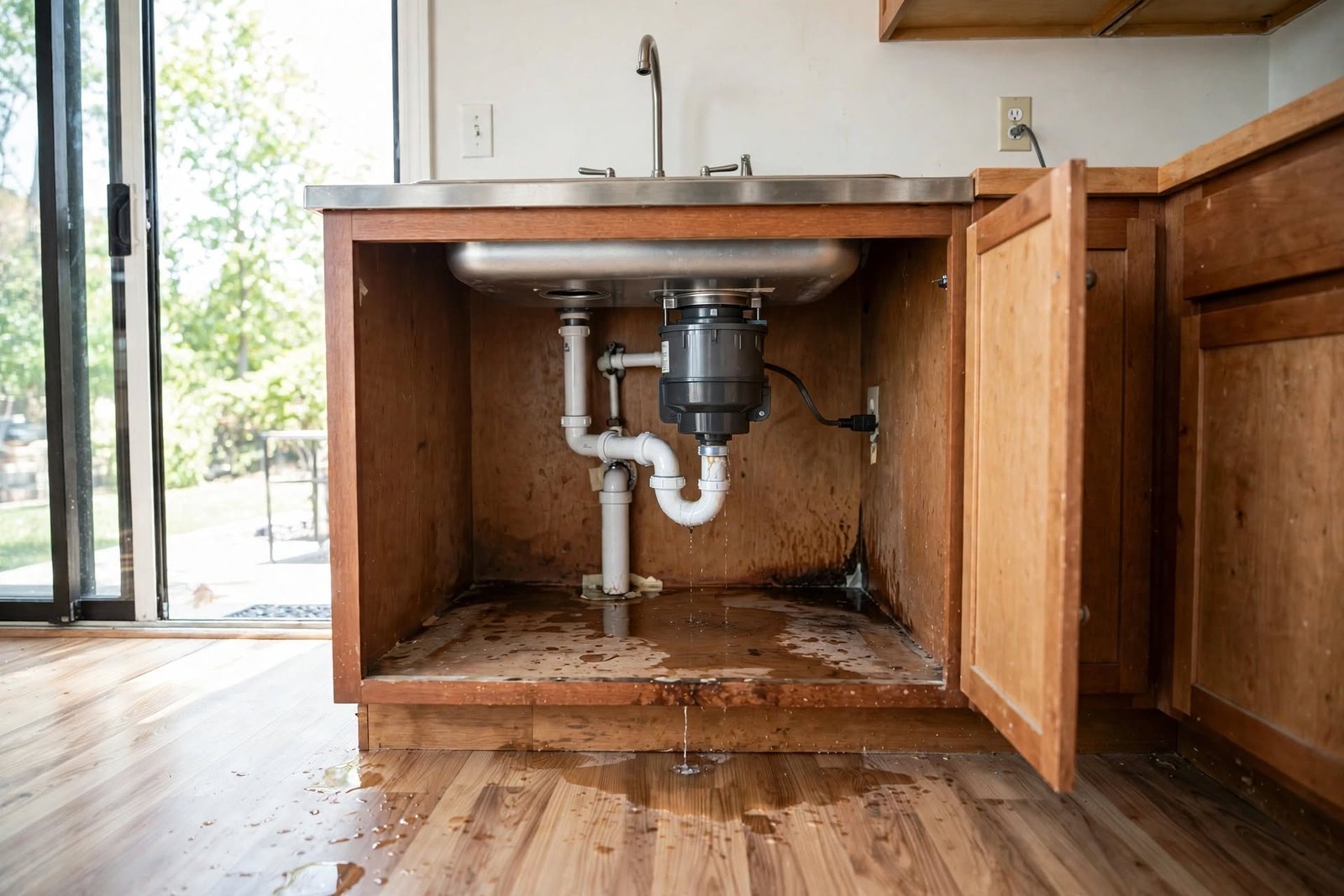
Finding water beneath your kitchen sink can be frustrating, especially when the garbage disposal is the source. A small leak can damage the cabinet base, affect stored items, and lead to more extensive moisture problems if it continues.
If your garbage disposal is leaking under the sink, the first step is to identify where the water is coming from. A leak near the top of the unit may have a different cause than water dripping from the bottom or from a connected drainpipe.
Understanding these differences can help you determine whether the disposal needs a plumbing repair, a replacement part, or a new unit.
Why Is Your Garbage Disposal Leaking Under the Sink?
A garbage disposal connects to several plumbing components, including the sink drain, dishwasher drain hose on applicable installations, and the drainpipe leading away from the unit. Water can escape from any of these connections or from the disposal itself.
The location of the leak provides an important clue.
1. Water Is Leaking From the Top of the Garbage Disposal
If water appears around the upper edge of the disposal, the sink flange or its seal may be the problem.
The sink flange is the fitting that connects the disposal to the sink drain opening. Over time, its seal can deteriorate, loosen, or fail, allowing water to seep between the sink and the disposal mounting assembly.
Common signs include:
- Water collecting around the upper portion of the disposal.
- Moisture appearing beneath the sink after water drains from the basin.
- Dampness around the mounting assembly.
A plumber can inspect the flange, mounting hardware, and seal to determine whether resealing or another repair is appropriate.
2. The Garbage Disposal Is Leaking From the Bottom
Water dripping from the bottom of the disposal deserves particular attention.
Some disposals can develop internal leaks when their internal seals or housing deteriorate. In these cases, tightening an external plumbing connection will not solve the underlying problem.
Watch for these warning signs:
- Water emerging directly from the bottom of the unit.
- Repeated puddles beneath the disposal even after external connections have been checked.
- Visible deterioration or damage to the disposal housing.
When an internal seal or the disposal body fails, replacing the unit is often more practical than attempting to repair the internal components. A plumber can confirm whether replacement is necessary.
If the leak is substantial, stop using the disposal and address the water supply and electrical safety concerns before further inspection.
3. Water Is Dripping From the Drainpipe Connection
A leak at the side or bottom drain connection may come from a loose fitting, damaged gasket, misaligned pipe, or deteriorated connection.
This type of leak may become more noticeable when water drains from the sink.
Check for moisture around the pipe connections without dismantling the assembly. If the leak occurs only while the sink is draining, the drain connection is one area a plumber may need to examine.
A damaged gasket or improperly fitted connection may be repairable without replacing the entire garbage disposal.
4. The Dishwasher Drain Hose Connection Is Leaking
If your dishwasher drains through the garbage disposal, its drain hose connects to an inlet on the unit.
A loose hose clamp, damaged hose, or poorly sealed connection can allow water to escape when the dishwasher empties.
You may notice the leak even when the garbage disposal itself is not running.
The hose and connection should be inspected for damage and proper fit. Avoid running the dishwasher repeatedly to test a leak that is already causing water to collect inside the cabinet.
5. Water Is Coming From the Sink Above the Disposal
Not every leak beneath a garbage disposal originates from the disposal itself.
Water may come from the sink drain, sink flange, faucet connections, or supply lines above the cabinet. It can travel along pipes or the outside of the unit before dripping onto the cabinet floor.
To help identify the source, dry the accessible surfaces and look for where moisture first reappears, provided it is safe to do so. Do not touch electrical connections or operate wet equipment.
If the source remains unclear, a plumber can inspect the surrounding kitchen plumbing rather than replacing a disposal that may still be in good condition.
Can You Fix a Leaking Garbage Disposal Yourself?
Some visible plumbing issues may be straightforward, but the appropriate solution depends on the source of the leak.
You can take a few safe preliminary steps:
- Stop using the disposal. Continued operation may worsen a leak or allow more water to collect.
- Keep the cabinet area clear. Remove stored items that could be damaged by moisture.
- Look for the general leak location. Check whether water appears near the sink flange, drainpipe, dishwasher hose, or bottom of the unit.
- Avoid electrical hazards. If water is near the disposal’s electrical components or outlet, do not touch the wet equipment. Shut off power at the breaker only if you can do so safely.
- Arrange an inspection if the source is uncertain. A persistent leak may require disassembly or inspection of components that are difficult to access safely.
Never put your hand inside a garbage disposal, even when you believe it is switched off. Do not use chemical drain cleaners in an attempt to stop a leak; they will not repair a failed seal and can create additional hazards.
If the disposal is leaking from its housing, the leak is significant, or water is reaching electrical components, leave the unit unused and seek professional assistance.
Should You Repair or Replace a Leaking Garbage Disposal?
The right choice depends on the condition of the unit and the component responsible for the leak.
Replacement may be the better option when:
- Water is leaking through the disposal's housing.
- An internal seal has failed and the unit cannot be economically repaired.
- The disposal is badly corroded, cracked, or repeatedly leaking.
- Replacement parts are unavailable or repairs are no longer practical.
- The unit has recurring problems and replacement offers a more reliable solution.
Repair may make sense when:
- A drainpipe connection is loose or damaged.
- A replaceable gasket or seal has failed.
- The dishwasher drain hose or its connection is leaking.
- The sink flange needs attention.
- The disposal itself remains in sound condition.
- A jammed disposal can be cleared without damaging the unit.
- A faulty reset button or electrical connection can be repaired.
A leaking disposal does not automatically need to be replaced. Identifying the exact source first can help avoid unnecessary expense.
What Happens During Professional Garbage Disposal Replacement?
When a disposal cannot be repaired reliably, replacing it involves more than removing the old unit and installing a new one.
A professional plumber can assess the existing installation, select a compatible replacement, and check the connected plumbing.
Depending on the setup, the work may include:
- Disconnecting and removing the existing disposal safely.
- Checking the sink flange and mounting assembly.
- Installing a compatible disposal and reconnecting the drainpipe.
- Reconnecting the dishwasher drain hose, where applicable.
- Checking for leaks and confirming proper drainage.
- Verifying that the unit operates correctly and that its electrical connection is safe.
The exact scope depends on the existing plumbing, the replacement unit, and whether additional repairs are needed.
If water has damaged the cabinet base or surrounding materials, that damage may also need attention after the plumbing leak has been resolved.
When Should You Call a Plumber for a Leaking Garbage Disposal?
Do not ignore a recurring leak simply because the amount of water seems small. Moisture can gradually damage cabinet materials and may conceal a problem behind the disposal or drain connections.
Consider professional plumbing service if:
- Water continues collecting beneath the sink.
- The disposal leaks from its bottom or housing.
- A drainpipe or dishwasher connection repeatedly leaks.
- The source of the water is difficult to identify.
- The disposal is corroded, damaged, or unreliable.
- You need to replace the unit or repair the surrounding kitchen plumbing.
If the leak is severe, stop using the unit and keep clear of wet electrical equipment. Address the water source promptly and arrange an inspection.
Need Garbage Disposal Repair or Replacement in St. Charles County?
A leaking garbage disposal can sometimes be repaired with a targeted plumbing fix. In other cases, replacing the unit is the more practical long-term solution.
Arch Plumbing provides residential plumbing services, including garbage disposal and kitchen plumbing work. If your disposal is leaking, our team can help assess the problem and determine the appropriate next step.
Rather than guessing which part has failed, have the source of the leak identified before deciding on a repair or replacement.
Need help with a leaking garbage disposal? Contact Arch Plumbing to discuss your plumbing problem and make an appointment.
Call (636) 299-3854 or visit our website to get started.
Frequently Asked Questions
Why is my garbage disposal leaking from the bottom?
A leak from the bottom may indicate a failed internal seal or damage to the disposal housing. If water is coming directly from the unit rather than a connected pipe, replacement may be necessary.
Can a leaking garbage disposal be repaired?
Yes, depending on the source. A leaking drain connection, dishwasher hose, or sink flange may be repairable. A disposal with a failed internal seal or damaged housing may need replacement.
Is a leaking garbage disposal dangerous?
It can be. Water can damage cabinets and surrounding materials, and leaks near electrical components create a safety concern. Stop using a wet or leaking unit if electrical safety is uncertain.
Why does my garbage disposal leak only when the dishwasher runs?
If the dishwasher drains through the disposal, water may escape from the dishwasher hose or inlet connection during the drain cycle. The hose, clamp, and connection should be inspected.
Should I replace my garbage disposal if it is leaking?
Not necessarily. The leak may come from an external connection that can be repaired. A plumber can identify the source and help determine whether repair or replacement is the better option.
Let’s Book Your Appointment
Fill out the form below and our team will contact you shortly to confirm your appointment.


