
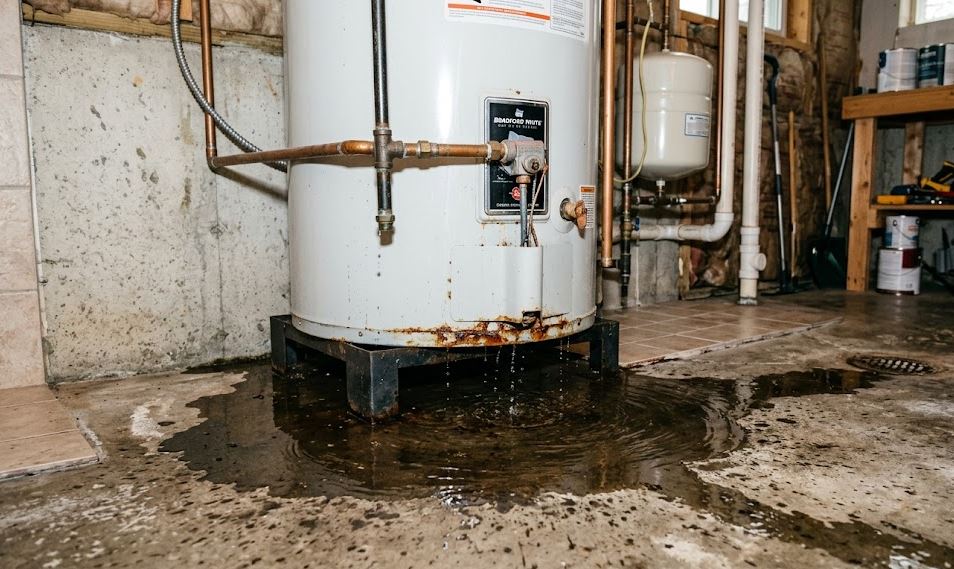
Discovering water around your water heater can be alarming for any homeowner. A leaking water heater is often a sign that something inside the system is failing, and ignoring the problem can eventually lead to water damage, higher utility bills, or complete loss of hot water.
One of the most common concerns homeowners face is water leaking from the bottom of the tank. While some leaks may involve simple repair issues, others can indicate that the water heater is nearing the end of its lifespan.
In this guide, we’ll explain the most common reasons water heaters leak from the bottom and when it may be time to contact a professional plumber.
Condensation May Look Like a Leak
In some cases, the water around the base of the heater is not actually caused by a major plumbing failure.
Condensation can develop when:
- cold water enters the tank
- the burner heats quickly
- humidity levels are high
This moisture sometimes collects near the bottom of the system and may appear similar to a leak.
If the moisture is minor and temporary, condensation could be the cause. However, persistent pooling water should always be inspected professionally.
Drain Valve Leaks
The drain valve is located near the bottom of most traditional tank water heaters. Over time, this valve can loosen or wear out, allowing water to slowly drip from the tank.
A leaking drain valve may be caused by:
- loose connections
- worn seals
- mineral buildup
- age-related wear
In some situations, replacing the valve may solve the problem.
Sediment Buildup Can Damage the Tank
Sediment buildup is a very common issue in older water heaters. Over time, minerals from the water supply settle at the bottom of the tank. This buildup can:
- reduce efficiency
- create rumbling noises
- trap heat inside the tank
- weaken internal components
Eventually, excessive sediment may contribute to cracks or corrosion inside the water heater.
Internal Tank Corrosion
One of the most serious causes of bottom leaks is internal tank corrosion.
As water heaters age, the inside lining of the tank can begin deteriorating. Once corrosion reaches the steel tank itself, water may start leaking through small cracks or weakened areas near the bottom.
Unfortunately, internal tank failure usually cannot be repaired safely. In many cases, full water heater replacement is recommended.
Loose Plumbing Connections
Sometimes the leak is not coming directly from the tank itself. Water may drip down from:
- water supply lines
- fittings
- nearby valves
- venting connections
Because water naturally travels downward, leaks from higher areas can appear to come from the bottom of the water heater.
A professional inspection helps identify the exact source of the problem.
Pressure Relief Valve Problems
The temperature and pressure relief valve is an important safety component designed to release excess pressure from the tank.
If pressure inside the water heater becomes too high, the valve may begin leaking water. Possible causes include:
- excessive tank pressure
- overheating
- faulty valve components
- expansion issues
This problem should be inspected promptly to ensure the system is operating safely.
Signs Your Water Heater May Need Replacement
A leaking water heater is often a warning sign that the system may be nearing failure. Common replacement warning signs include:
- water pooling around the tank
- rusty or discolored hot water
- inconsistent hot water
- loud banging or rumbling noises
- rising energy bills
- frequent repairs
- system age over 10–12 years
Replacing an aging water heater before complete failure may help prevent water damage and emergency breakdowns.
Should You Repair or Replace a Leaking Water Heater?
The best solution depends on:
- the age of the unit
- the source of the leak
- overall system condition
- repair history
Minor issues like loose valves or fittings may sometimes be repairable. However, leaks caused by internal corrosion or tank failure usually require replacement.
A professional plumber can inspect the unit and recommend the safest and most cost-effective solution.
Why Fast Repairs Matter
Ignoring a leaking water heater can lead to:
- water damage
- mold growth
- flooring damage
- higher utility bills
- sudden tank failure
Quick action helps reduce the risk of more expensive plumbing and property repairs later.
Professional Water Heater Service in St. Charles County
Whether your water heater needs repair or replacement, professional service helps ensure safe operation and reliable hot water for your home.
Arch Plumbing provides water heater repair and replacement services throughout St. Charles County, including St. Peters, O’Fallon, Wentzville, and surrounding communities.
If you notice water leaking around your water heater, schedule a professional inspection to identify the cause before the problem worsens.
Frequently Asked Questions
Why is my water heater leaking from the bottom?
Common causes include drain valve leaks, internal tank corrosion, sediment buildup, loose plumbing connections, or pressure relief valve problems.
Is a leaking water heater dangerous?
A leaking water heater can eventually cause water damage, mold growth, or complete tank failure if ignored. Some leaks may also indicate pressure or safety issues that require immediate inspection.
Can a leaking water heater be repaired?
Some leaks caused by valves or fittings may be repairable. However, leaks caused by internal tank corrosion often require full replacement.
How long do water heaters usually last?
Traditional tank water heaters typically last around 8–12 years depending on maintenance, water quality, and usage.
What are signs my water heater is failing?
Common warning signs include:
- leaking water
- rusty hot water
- inconsistent temperatures
- loud noises
- rising utility bills
- reduced hot water supply
Can sediment buildup damage a water heater?
Yes. Excess sediment inside the tank can reduce efficiency, create overheating problems, and eventually contribute to tank damage or leaks.
Should I turn off a leaking water heater?
If significant leaking occurs, shutting off the water supply and power source may help reduce damage until a plumber arrives.
When should I replace my water heater?
Replacement is often recommended when the tank is leaking internally, repairs become frequent, or the system is over 10–12 years old.
Let’s Book Your Appointment
Fill out the form below and our team will contact you shortly to confirm your appointment.




