
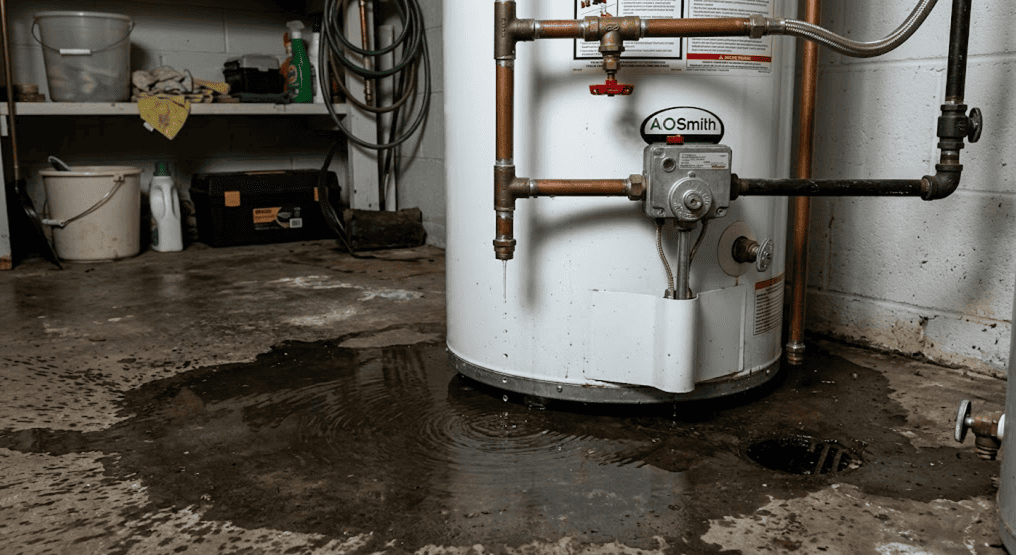
Finding water around the bottom of your water heater can be alarming, especially when you cannot immediately see where the water is coming from. A small amount of moisture can sometimes come from a loose connection or another repairable issue, but water leaking directly from the bottom of the tank can also indicate a serious problem.
Ignoring the leak may allow water damage to spread to flooring, walls, cabinets, or other nearby areas. In some situations, continuing to operate a leaking water heater can make the problem worse.
So, what does it mean when a water heater is leaking from the bottom?
The answer depends on where the water is actually coming from and what type of water heater you have. Here are the most common causes and what homeowners should do next.
First: Turn Your Attention to the Leak
Before trying to determine the exact cause, take a moment to assess the situation.
If water is actively pouring from the water heater, the leak is getting larger, or water is reaching electrical equipment or other unsafe areas, treat it as a plumbing emergency.
You can also read our guide on What to Do in a Plumbing Emergency Before the Plumber Arrives (St. Charles County Guide) for practical steps to help limit damage while waiting for professional assistance.
If you know how to safely shut off the water supply to the heater, doing so can help prevent additional water from entering the tank. Gas water heaters may also require the gas supply to be shut off if there is an immediate safety concern. If you are unsure what to shut off or cannot safely access the controls, avoid experimenting and contact a qualified plumber.
1. The Drain Valve May Be Leaking
One of the simplest explanations for water near the bottom of a tank water heater is a leaking drain valve.
The drain valve is located near the lower portion of the tank and is used when draining or servicing the water heater. Over time, the valve or its connection can begin to leak.
You may notice:
- A small puddle directly below the valve
- Continuous dripping
- Moisture around the valve connection
- Water that appears to be coming from the lower side of the tank
A leaking drain valve does not necessarily mean the entire water heater needs to be replaced. Depending on the condition of the valve and the heater, a plumber may be able to repair or replace the faulty component.
2. A Water Connection Above the Tank May Be Leaking
Water does not always appear on the floor directly below the point where it originates.
A leak from a supply connection, fitting, shut-off valve, or another component above the tank can run downward along the outside of the water heater. By the time the water reaches the floor, it may look like the tank itself is leaking from the bottom.
This is why simply seeing water underneath the heater does not always identify the source.
A plumber can inspect the connections and surrounding components to determine where the water is entering or escaping.
3. The Temperature and Pressure Relief Valve Could Be Discharging Water
Water heaters have safety components designed to protect the system from excessive temperature or pressure.
The temperature and pressure relief valve, commonly called the T&P valve, can discharge water when certain conditions occur. A problem with the valve itself or an underlying pressure or temperature issue may cause repeated discharge.
Because this valve is an important safety component, it should not simply be capped, blocked, or ignored.
If you notice water coming from the discharge pipe connected to the valve, professional inspection is recommended.
4. The Tank Itself May Be Corroded
One of the more serious causes of a water heater leak is corrosion inside the tank.
Tank-style water heaters contain a large volume of water under pressure. Over years of use, corrosion can weaken the metal tank. Once the tank develops a crack, pinhole, or other failure point, water can begin escaping.
If the actual storage tank has started leaking, repair may not be practical.
In many cases, water heater replacement is the more appropriate long-term solution.
This is particularly important for older water heaters. A heater that has already developed significant corrosion is unlikely to become reliable simply because one visible leak is addressed.
5. Sediment Can Contribute to Water Heater Problems
Minerals and sediment can accumulate inside a tank over time. This is especially relevant in areas where water contains significant mineral content.
Sediment can settle at the bottom of the tank and interfere with normal operation. Over time, repeated heating and cooling can place additional stress on the tank and its components.
Sediment buildup may also be associated with:
- Rumbling or popping noises
- Reduced heating performance
- Longer recovery times
- Increased energy use
- Premature water heater wear
Sediment is not automatically the cause of every bottom leak, but it is one reason regular inspection and maintenance can matter.
6. The Bottom of the Tank May Be Rusting
If the bottom portion of the water heater shows visible rust, do not assume that cleaning the outside will solve the problem.
External rust can sometimes be cosmetic, but significant corrosion around the base may indicate that the tank is deteriorating.
If corrosion has progressed far enough for the tank to develop a leak, replacement may be necessary.
A professional inspection can help determine whether the issue is limited to an external component or whether the tank itself has reached the end of its useful life.
Is a Water Heater Leaking From the Bottom Always an Emergency?
Not every water heater leak produces the same level of urgency.
A slow drip from a replaceable valve is different from water actively escaping from a damaged tank. However, any unexplained water around a water heater deserves attention.
You should take the situation more seriously when:
- The amount of water is increasing
- Water is coming directly from the tank
- The tank is visibly corroded
- Water is spreading across the floor
- The heater has stopped producing hot water
- You hear unusual sounds from the tank
- The leak is near electrical equipment
- You smell gas around a gas water heater
When water is actively leaking, waiting to see whether it stops on its own can allow a relatively manageable plumbing problem to become expensive water damage.
Can a Leaking Water Heater Be Repaired?
Sometimes.
If the leak is caused by a drain valve, connection, fitting, or another replaceable component, repair may be possible.
However, if the storage tank itself has developed a leak because of corrosion or internal deterioration, replacing the water heater is generally the more dependable option.
The important question is not simply “Can the leak be stopped?”
It is also:
“What caused the leak, and is the water heater still reliable enough to keep?”
A temporary fix may not make sense if the tank is already severely corroded or nearing the end of its service life.
Repair or Replacement? What Should You Consider?
A plumber will typically consider several factors before recommending repair or replacement.
Age of the Water Heater
An older heater with a new leak may have other components approaching the end of their useful life. Repairing one part may only postpone another problem.
Location of the Leak
A leaking valve or fitting may be repairable. A leak from the tank itself is a much more serious situation.
Condition of the Tank
Visible corrosion, repeated leaks, or other signs of deterioration can indicate that replacement is a better investment.
Repair History
If you have already repaired the water heater several times, another repair may not provide the value or reliability you need.
Water Damage Risk
Even a small leak can damage flooring and surrounding materials if it continues unnoticed.
What Should You Do If Your Water Heater Is Leaking?
Start by limiting the potential for additional water damage.
If it is safe for you to do so, shut off the water supply to the water heater and address the power or fuel source according to the type of system and the manufacturer’s safety instructions.
Do not attempt to open the tank, bypass safety devices, or make repairs you are not equipped to perform.
Take a few photos of the area if possible. They can help a plumber understand what you are seeing before arriving.
Most importantly, do not ignore a water heater leak simply because it appears small. The visible puddle may not reveal the actual condition of the tank or the components around it.
When Should You Call a Plumber?
Call a professional when you cannot identify the source of the leak, the leak continues after shutting off the water supply, or you suspect the tank itself is damaged.
Professional inspection is especially important when the heater is older, visibly corroded, repeatedly leaking, or no longer heating water properly.
A plumber can determine whether the problem is a repairable component or a sign that the water heater needs to be replaced.
Protect Your Home From a Water Heater Leak
A leaking water heater is not something most homeowners want to discover. The good news is that not every leak means you immediately need a new water heater.
The key is identifying the source before the problem causes additional damage.
A leaking valve or connection may be a relatively straightforward repair. A leaking or corroded tank, on the other hand, may require water heater replacement.
If you are dealing with water around the bottom of your water heater, getting the source checked sooner rather than later can help you make the right decision and avoid unnecessary damage.
Need help determining whether your water heater needs repair or replacement? Contact Arch Plumbing to schedule an appointment with a professional plumber serving St. Charles County and surrounding communities.
Let’s Book Your Appointment
Fill out the form below and our team will contact you shortly to confirm your appointment.




