
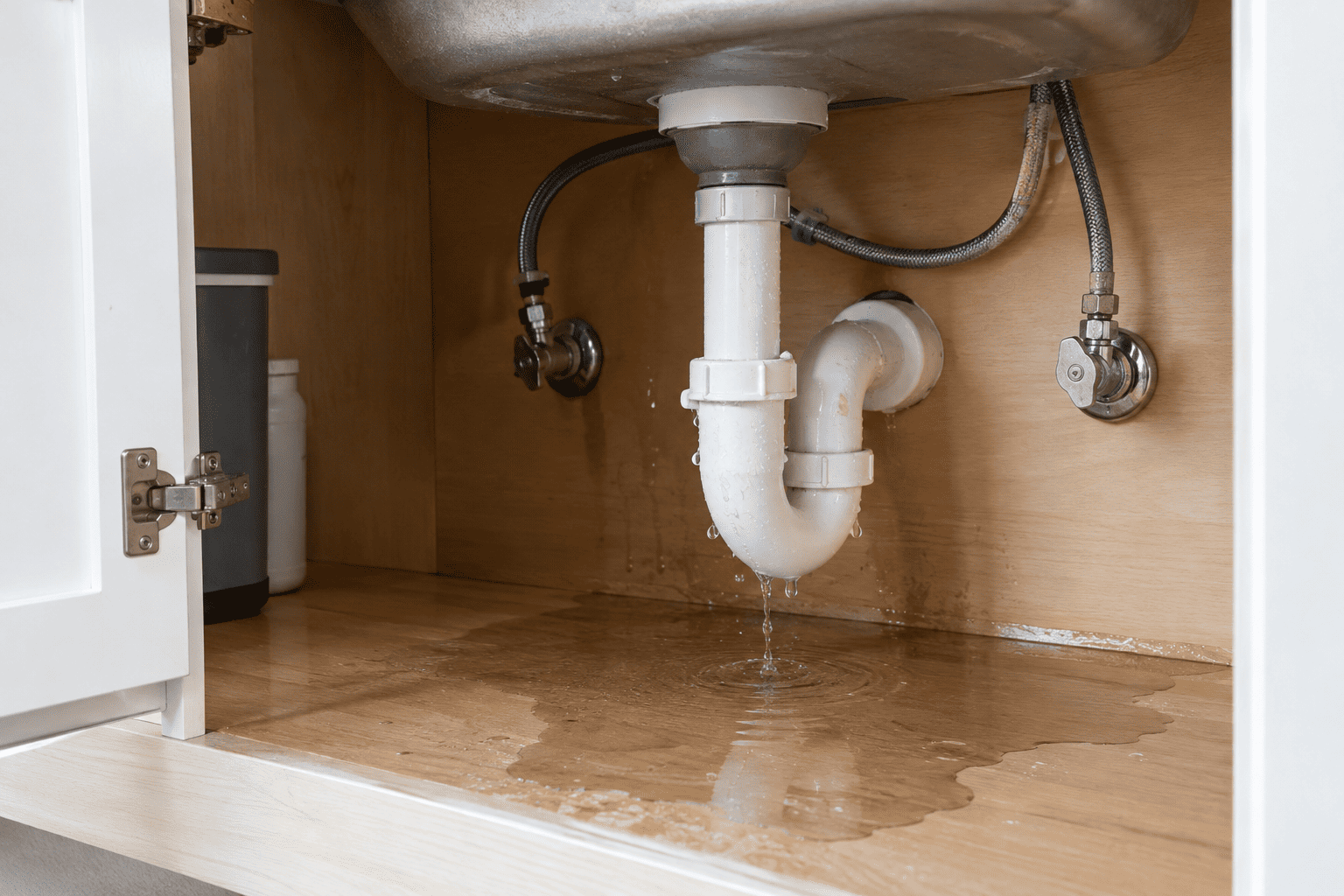
Finding water pooling inside the cabinet beneath your kitchen sink is something you shouldn’t ignore. A small puddle can come from something as simple as a loose connection, but it can also point to a damaged drain pipe, leaking faucet supply line, garbage disposal, or another plumbing problem.
The good news is that you can often narrow down the source before calling a plumber. The important thing is not to assume the leak is coming from the spot where you see the water. Water can travel along pipes, cabinet surfaces, and the bottom of the sink before collecting in one area.
Here’s what could be happening and what you should do next.
1. The P-Trap May Be Leaking
The curved pipe underneath your sink is called the P-trap. It holds a small amount of water and helps prevent sewer gases from entering your home.
Because it contains water whenever the sink drains, a loose connection, worn washer, cracked trap, or damaged fitting can cause water to drip into the cabinet.
Signs the P-trap may be the problem include:
- Water appears shortly after you drain the sink
- You see dripping around the curved pipe
- The cabinet floor is wet directly below the drain
- The leak gets worse when the sink is emptied
If the connections are visibly loose, a plumber can determine whether tightening the fitting is enough or whether a component needs replacement.
2. A Drain Pipe Connection Could Be Loose
Your sink drain connects to a series of pipes underneath the cabinet. Over time, connections can loosen or seals can deteriorate.
This type of leak may not be obvious while the sink is sitting unused. You may only notice water when you’re running the faucet or draining a full basin.
If water appears only when the sink drains, the drain assembly or one of its connections becomes a likely place to investigate.
3. The Faucet Supply Lines May Be Leaking
Not every kitchen sink leak comes from the drain.
Flexible supply lines underneath the sink carry water to the faucet. If one develops a damaged connection or begins to deteriorate, it can leak even when the sink isn’t being used.
This is particularly important because a pressurized supply-line leak can continue producing water even when the drain isn’t being used.
If you find water around the supply connections, shut off the sink’s water supply valves and arrange for the leak to be inspected.
4. The Faucet Base Could Be Letting Water Into the Cabinet
Sometimes the plumbing underneath the sink is perfectly fine.
Water can seep around the base of the faucet if the seal has deteriorated or the faucet has become loose. That water can then run underneath the sink and eventually appear inside the cabinet.
A useful clue is whether the leak happens when water is running around the faucet rather than when the sink is simply draining.
5. Your Garbage Disposal May Be Leaking
If your kitchen sink has a garbage disposal, don’t overlook it.
A disposal can leak from several locations, including:
- The connection between the disposal and sink
- The drain connection
- The dishwasher connection
- The disposal body itself
A leak from the disposal may become especially noticeable when you run the sink or disposal.
If the disposal itself is cracked or leaking from its housing, replacement may be necessary rather than simply tightening a connection.
6. The Sink Strainer May Have a Bad Seal
The drain opening at the bottom of your sink connects to the plumbing below through the sink strainer.
If the seal around that connection deteriorates, water can escape underneath the sink whenever you use the basin.
This can be easy to miss because the leak may only happen while water is sitting in or draining from the sink.
7. A Dishwasher Drain Connection Could Be Leaking
Your dishwasher is another possible source of water underneath the kitchen sink.
Many dishwasher drain hoses connect to the plumbing beneath the sink or to the garbage disposal. If the hose connection becomes loose, cracked, or damaged, water can collect inside the cabinet.
If you notice the leak after running the dishwasher rather than after using the sink, this connection deserves attention.
How to Find Where the Water Is Coming From
Before reaching for tools, you can do a simple inspection to identify when and where the leak occurs.
Step 1: Remove Everything From Under the Sink
Take out cleaning supplies, trash cans, and other items so you can see the plumbing clearly.
Dry the cabinet floor and pipes with a towel.
Step 2: Check for Visible Drips
Look at:
- Faucet supply lines
- Drain connections
- P-trap
- Sink drain
- Garbage disposal connections
- Dishwasher hose connection
Don’t put your hands around electrical components or a garbage disposal that is connected to power.
Step 3: Run the Faucet
Run a small amount of water and watch the plumbing underneath.
If water begins dripping while the faucet is running, you may have a supply-side or drain-related problem.
Step 4: Fill and Drain the Sink
Fill the basin partially and then let it drain.
If the leak appears primarily while the water is draining, pay particular attention to the sink drain, strainer, P-trap, and drain connections.
Step 5: Check After Running the Dishwasher
If the cabinet remains dry when using the sink but becomes wet after a dishwasher cycle, inspect the dishwasher drain connection.
Is a Leak Under the Kitchen Sink an Emergency?
Not every kitchen sink leak requires an emergency plumber, but some should be addressed quickly.
Call for professional plumbing help if:
- Water is leaking continuously
- A supply line is spraying or producing a steady stream
- You cannot identify the source
- Water is damaging the cabinet or flooring
- The leak is near an electrical connection
- You notice a sewer smell
- Multiple fixtures are draining slowly
- Water keeps returning after a temporary fix
- You suspect a broken or damaged pipe
A small leak can gradually damage cabinetry, flooring, and surrounding materials. More importantly, a leak that appears minor may be a symptom of a larger plumbing problem.
What Should You Do If Your Kitchen Sink Is Leaking?
If you discover water underneath your sink, start by stopping the water source if you can safely do so.
For a faucet supply-line leak, the shutoff valves underneath the sink may allow you to stop the water temporarily. If the leak is substantial or you aren’t sure which valve controls the fixture, your home’s main water shutoff may be necessary.
Then:
- Remove standing water.
- Move items away from the leak.
- Avoid using the sink if it makes the leak worse.
- Check where the water first appears.
- Don’t keep tightening fittings if the leak continues.
- Have a plumber inspect recurring or unidentified leaks.
A temporary reduction in dripping doesn’t necessarily mean the problem is fixed.
When Should You Call a Professional Plumber?
If you’ve dried the cabinet and can clearly see a simple loose connection, you may be able to determine the source yourself. But plumbing underneath a kitchen sink involves multiple connections, and the visible water isn’t always coming from the actual failure point.
Professional inspection is especially worthwhile when the leak keeps returning, occurs inside a wall or cabinet, involves a garbage disposal or dishwasher connection, or is causing water damage.
At Arch Plumbing, we can help identify the source of kitchen plumbing leaks and determine whether the problem requires a repair, replacement, or another plumbing solution. Getting the source identified early can help prevent a small leak from becoming expensive water damage.
Don’t Ignore Water Under Your Kitchen Sink
Water underneath your kitchen sink could be caused by something relatively simple, such as a loose drain connection, or something that requires a more involved repair.
The key is to determine when the water appears and where it starts. If the leak is continuous, difficult to locate, or causing damage, don’t wait for the puddle to get bigger.
A professional plumber can inspect the connections, identify the actual source, and address the underlying problem rather than simply drying up the water.
Frequently Asked Questions
Why is there water under my kitchen sink but no visible leak?
Water can travel along pipes or the underside of the sink before collecting in another location. Dry the area and observe the plumbing while running and draining the sink to help identify where the water originates.
Why does my kitchen sink leak only when I drain it?
A leak that occurs specifically during draining may involve the sink drain, strainer, P-trap, or another drain-pipe connection.
Can I still use my kitchen sink if it is leaking underneath?
It’s better to limit use until you know the source, particularly if the leak is producing significant water or damaging the cabinet. Continued use can make some leaks worse.
How do I stop a kitchen sink leak temporarily?
If water is coming from a faucet supply connection, you may be able to close the fixture’s shutoff valve. For a significant or uncontrolled leak, shut off the appropriate water supply and contact a plumber.
Why does my kitchen sink cabinet smell bad when it's wet?
A persistent odor could be related to stagnant water, a drain problem, or a plumbing connection allowing sewer gases to escape. A recurring smell should be investigated rather than covered with cleaners or air fresheners.
Can a leaking kitchen sink cause cabinet damage?
Yes. Repeated exposure to water can damage cabinet materials, flooring, and surrounding areas. Fixing the plumbing leak early can help prevent more extensive damage.
Let’s Book Your Appointment
Fill out the form below and our team will contact you shortly to confirm your appointment.




