
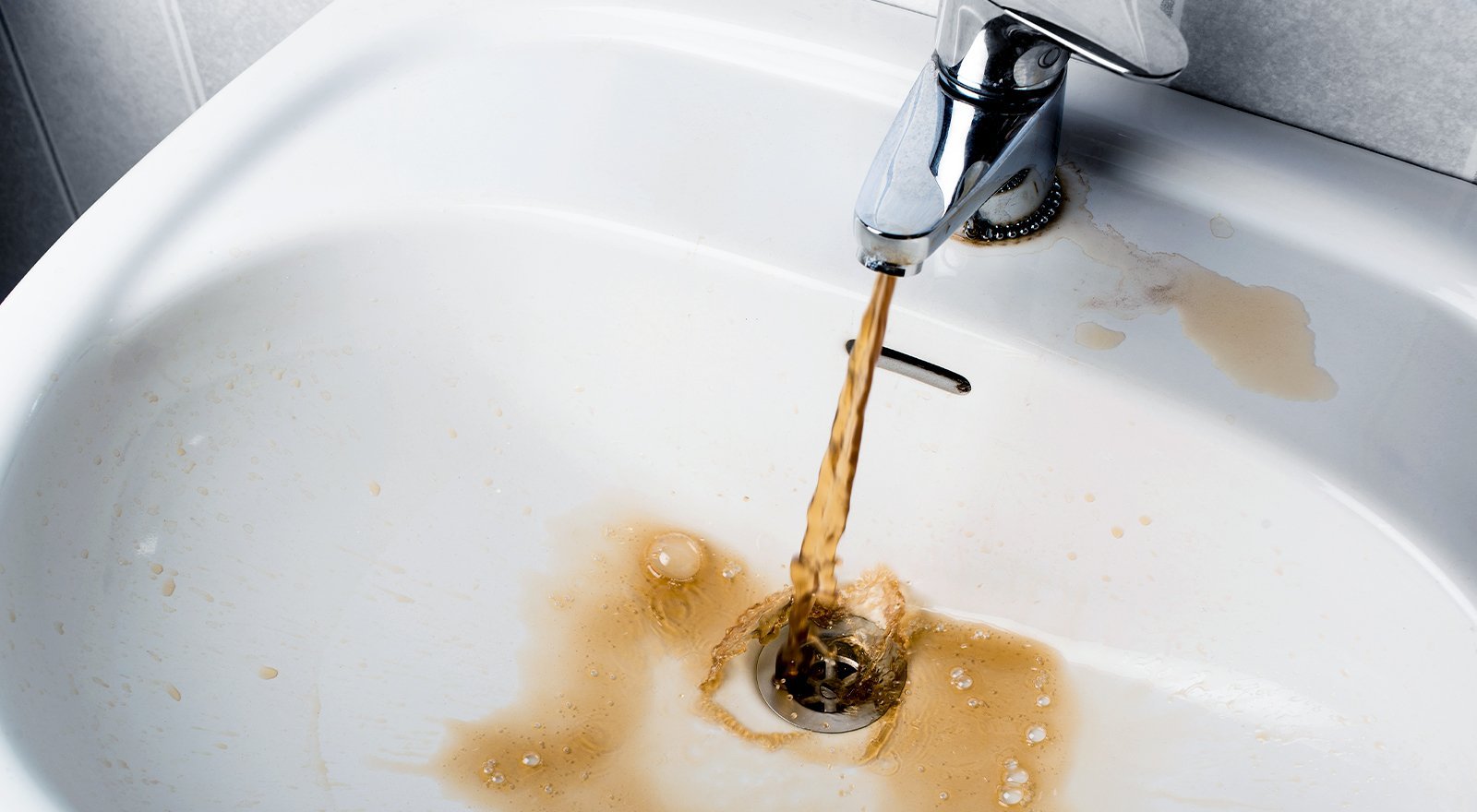
If rusty or brown-colored water is coming from your hot water faucet, it is easy to assume there is a problem with your home’s entire water supply. But when the discoloration appears only when you turn on the hot water, the water heater or the hot-water plumbing may be the source.
Rusty-looking water can come from corrosion inside the water heater, aging plumbing components, or sediment that has built up over time. In some cases, the issue may be temporary. In others, it can be an early warning that your water heater needs attention.
Understanding where the discoloration comes from can help you determine whether you need a simple inspection, a repair, or eventually a water heater replacement.
Why Is Only the Hot Water Rusty?
The first thing to check is whether the discoloration affects both hot and cold water.
If cold water looks clear but hot water comes out rusty, the problem is more likely connected to the water heater or the hot-water plumbing system.
If rusty or brown water comes from both hot and cold faucets, the cause may be somewhere else, such as the home’s plumbing, a water main issue, or temporary disturbance in the local water supply.
Try running a cold-water faucet for a few moments and compare it with the hot water. This simple check can help narrow down where the problem is occurring.
Common Causes of Rusty Water From a Hot Water Faucet
1. Corrosion Inside the Water Heater
One of the most common concerns is corrosion inside an aging storage-tank water heater.
Water heaters contain metal components that are exposed to water every day. Over time, corrosion can develop if the protective components inside the tank become depleted or the tank itself begins to deteriorate.
As corrosion progresses, rust particles can enter the hot-water supply and cause brown, orange, or rusty-looking water.
If the discoloration is becoming more frequent or is accompanied by other water-heater problems, an inspection can help determine whether the unit is nearing the end of its useful life.
2. A Worn-Out Anode Rod
Traditional tank water heaters commonly use an anode rod to help protect the tank from corrosion.
The rod is designed to deteriorate before the steel tank does. As it becomes depleted, the tank may become more vulnerable to corrosion.
A heavily worn anode rod does not necessarily mean the entire water heater needs to be replaced. Depending on the condition and age of the unit, replacing the rod may be part of maintaining the water heater.
However, if the tank itself is already corroding or showing other signs of deterioration, a larger repair or replacement may be necessary.
3. Sediment and Rust Buildup
Minerals and sediment can accumulate inside a storage-tank water heater over time.
This buildup can settle at the bottom of the tank and may become disturbed when the water heater operates. If rust or sediment enters the hot-water lines, you may notice discolored water coming from your faucets.
Sediment buildup can also contribute to other problems, including unusual noises, reduced heating efficiency, and inconsistent hot-water performance.
4. Corroded Hot-Water Pipes or Fittings
The water heater isn’t always the source.
Older homes may have aging metal plumbing components that can corrode over time. If corrosion is occurring in a section of the hot-water piping, rusty water may appear at certain fixtures.
This is particularly important if:
- Only one faucet produces rusty hot water
- Other hot-water fixtures remain clear
- The water discoloration occurs intermittently
- The home has older plumbing
A plumber can help determine whether the issue is isolated to a fixture, a section of piping, or the water heater itself.
5. A Problem With the Faucet or Fixture
Sometimes the water heater gets blamed when the actual problem is much closer to the faucet.
A corroded faucet, supply connection, or nearby plumbing component can introduce discoloration into the water coming from that fixture.
If rusty water appears at only one hot-water faucet, compare it with other hot-water fixtures in the house.
If the other fixtures produce clear hot water, the faucet or nearby plumbing may deserve closer inspection.
What If the Rusty Water Appears Only for a Few Seconds?
If the water is rusty when you first turn on a hot faucet but becomes clear after the water runs for a short time, there may be corrosion or sediment sitting in the nearby plumbing.
This pattern is different from water that remains rusty throughout the entire use of the fixture.
Pay attention to how long the discoloration lasts and whether it happens every time. Those details can help a plumber identify where the problem may be occurring.
What If Every Hot-Water Faucet Has Rusty Water?
If several hot-water faucets throughout the home produce rusty water while the cold water remains clear, the water heater becomes a stronger suspect.
Check fixtures in different parts of the house.
For example, compare:
- Kitchen hot water
- Bathroom sink hot water
- Shower hot water
- Laundry-area hot water
If the same discoloration appears throughout the home’s hot-water fixtures, it is less likely to be a single faucet problem.
An inspection can help determine whether the issue is related to the water heater, internal components, or the hot-water distribution system.
Can Rusty Hot Water Mean My Water Heater Needs to Be Replaced?
It can, but rusty water alone does not automatically mean the water heater needs replacement.
The condition and age of the unit matter.
Replacement may become a consideration when rusty water is accompanied by other warning signs such as:
- Water leaking around the tank
- Visible corrosion on the tank
- Frequent water-heater repairs
- Inconsistent hot-water supply
- Water that takes unusually long to heat
- Loud popping or rumbling noises
- A water heater that is reaching the end of its expected service life
If several of these problems are happening at the same time, having the water heater evaluated can help you determine whether continued repairs make sense or whether replacement should be considered.
Should You Keep Using a Water Heater That Produces Rusty Water?
That depends on the cause.
Occasional discoloration may have a relatively simple explanation, but persistent rusty hot water should not simply be ignored.
If the water heater is corroding internally, continued deterioration could eventually lead to leakage or other water-heater problems.
If you notice rusty water along with a leak, significant corrosion, or another obvious problem with the tank, arrange for a professional inspection rather than continuing to troubleshoot the unit yourself.
What You Can Check Before Calling a Plumber
A few simple observations can provide useful information.
Check the cold water
Run the cold water from the same faucet.
If the cold water is clear while the hot water is rusty, the problem is more likely associated with the hot-water system.
Check another hot-water faucet
Try a bathroom sink or another fixture.
If rusty water appears at multiple hot-water fixtures, the water heater or hot-water plumbing becomes more likely to be involved.
Notice how long the discoloration lasts
Does the water become clear after a few seconds, or does it remain discolored?
That difference can help identify whether the issue is localized or affecting the hot-water system more broadly.
Look at the water heater
If it is safe to do so, look for obvious signs such as exterior corrosion or water around the tank.
Do not remove panels or attempt to disassemble the water heater yourself.
When Should You Have the Water Heater Inspected?
Consider having your water heater checked if the rusty water:
- Keeps returning
- Is becoming darker or more frequent
- Appears at multiple hot-water fixtures
- Is accompanied by unusual noises
- Comes with reduced hot-water performance
- Occurs with visible corrosion
- Appears alongside leaking or moisture around the water heater
The goal is not simply to determine whether the water looks rusty. A professional inspection can help identify where the rust is coming from and whether the underlying component can be repaired or should be replaced.
Rusty Hot Water Can Be an Early Warning
Rusty water from a hot-water faucet can have several causes, from a corroded faucet or plumbing connection to sediment buildup or deterioration inside an older water heater.
The easiest way to narrow it down is to compare the hot and cold water, check more than one fixture, and pay attention to how long the discoloration lasts.
If the problem is occurring throughout your home’s hot-water system or is accompanied by other water-heater warning signs, professional evaluation can help you avoid waiting until a larger problem develops.
If your water heater is aging or showing multiple signs of deterioration, Arch Plumbing can help you evaluate your options for water heater repair, replacement, or installation.
Frequently Asked Questions
Is rusty hot water safe to use?
Rusty or brown-colored water should be investigated rather than ignored, particularly when the discoloration is persistent. Determine whether the problem is limited to hot water and whether it occurs at multiple fixtures.
Why is my hot water brown but my cold water clear?
When only hot water is discolored, the water heater or hot-water plumbing is a likely place to investigate. Possible causes include corrosion, sediment, an aging anode rod, or corroded plumbing components.
Can a water heater cause rusty water?
Yes. Corrosion or sediment inside a storage-tank water heater can contribute to rusty or brown-colored hot water.
Does rusty water always mean I need a new water heater?
No. The cause needs to be identified first. A worn component or plumbing issue may be repairable, while significant tank corrosion or multiple age-related problems may make replacement more appropriate.
Why does only one hot-water faucet have rusty water?
If other hot-water fixtures produce clear water, the issue may be isolated to that faucet, its connections, or nearby plumbing rather than the entire water heater.
Let’s Book Your Appointment
Fill out the form below and our team will contact you shortly to confirm your appointment.




