
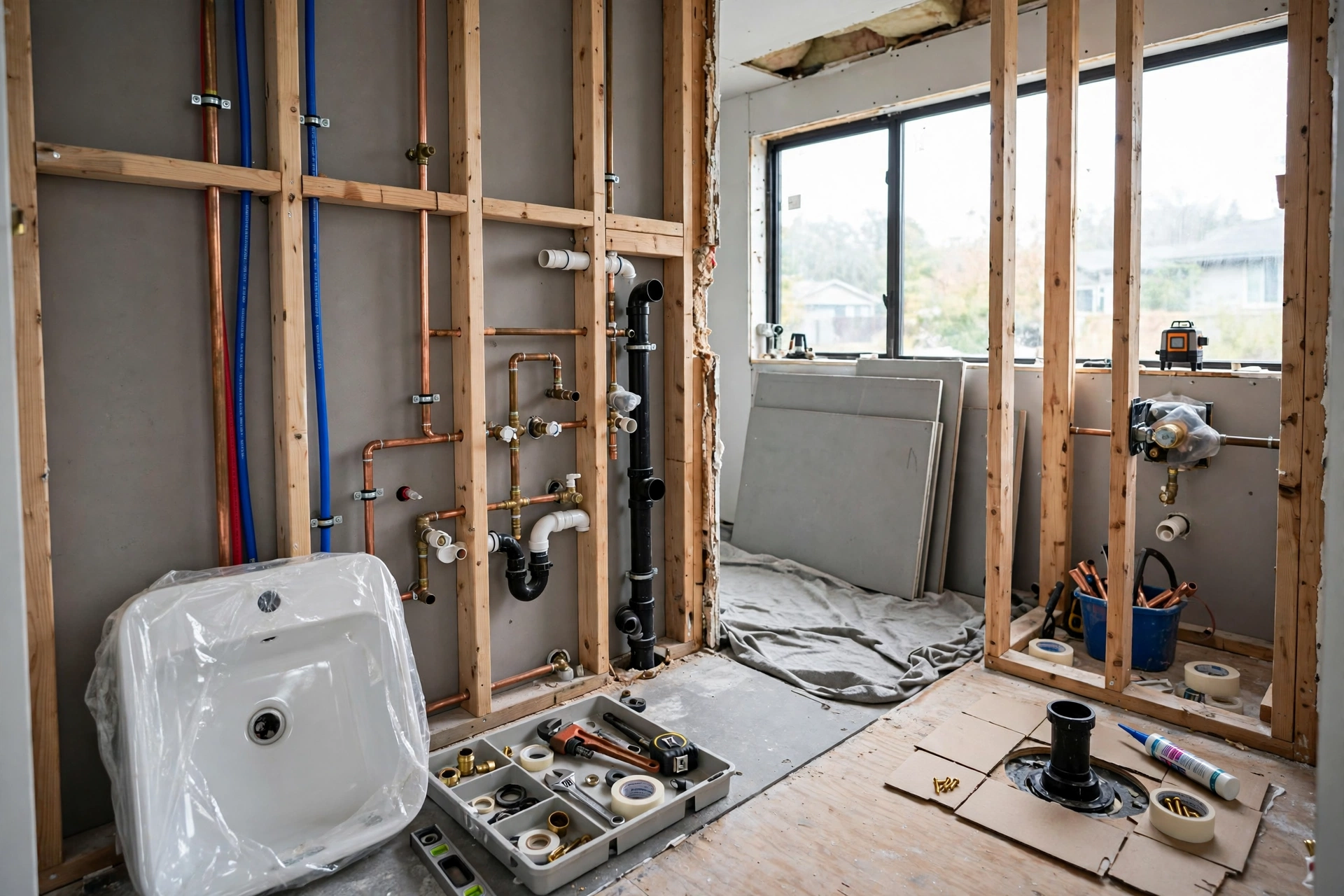
Planning a home renovation is exciting. Whether you’re updating an outdated bathroom, redesigning your kitchen, finishing a basement, or making improvements throughout your home, there are many details to consider before construction begins.
Most homeowners focus on new flooring, cabinets, countertops, paint, and fixtures. However, one important part of a renovation project often gets overlooked: the plumbing system.
Your plumbing plays an essential role in how your renovated space functions every day. Moving a sink, installing a new bathtub, adding a shower, or relocating appliances can require plumbing modifications that should be planned before the renovation gets underway.
Taking time to evaluate your existing plumbing can help prevent unexpected problems, avoid unnecessary rework, and make sure your new space works as well as it looks.
Here’s what homeowners should consider when planning plumbing during a home renovation.
1. Inspect Your Existing Plumbing Before Renovation Begins
Before choosing new fixtures or finalizing your renovation layout, take a closer look at the plumbing already in place.
Older pipes, hidden leaks, corroded connections, and outdated plumbing components can become bigger concerns once walls, floors, and cabinets are removed or covered.
A plumbing inspection can help identify issues that may need attention before construction progresses.
Pay attention to:
- Visible pipe corrosion or deterioration
- Signs of water leaks around sinks, toilets, and fixtures
- Slow drains or recurring drain clogs
- Low or inconsistent water pressure
- Aging water supply and drain connections
- Plumbing fixtures that frequently require repairs
Addressing existing plumbing concerns before installing new materials can help prevent the need to reopen finished walls or remove newly installed cabinets and flooring.
2. Plan Plumbing Changes for Your Kitchen Renovation
Kitchen renovations often involve more than replacing cabinets and countertops. Changes to the kitchen layout may also require adjustments to the plumbing system.
For example, moving a kitchen sink to a different location or adding a kitchen island with a sink can require modifications to water supply lines and drain connections.
If you’re upgrading your kitchen, consider the following plumbing components:
Kitchen sink and faucet: A new sink or faucet may require different connections, supply lines, or installation adjustments.
Garbage disposal: If you're installing or replacing a garbage disposal, make sure the drain connections and electrical requirements are properly considered.
Dishwasher connections: A kitchen renovation is a good opportunity to inspect the dishwasher's water supply and drain connections.
Water supply lines: If the kitchen layout is changing, existing supply lines may need to be relocated or modified.
Planning these details early helps coordinate plumbing work with cabinetry, countertops, and other renovation activities.
3. Don’t Forget Plumbing When Remodeling Your Bathroom
Bathroom remodeling is one of the most important projects where plumbing planning matters.
Replacing an old bathtub, installing a new shower, upgrading a vanity, or changing the location of a toilet can involve several plumbing modifications.
Before starting your bathroom renovation, consider these areas:
- Bathtub installation: Make sure the existing drain and water supply connections are suitable for the new bathtub.
- Shower valves and cartridges: Worn or outdated shower valves may need replacement when installing a new shower system.
- Bathroom faucets: New sink faucets may require different connections or installation adjustments.
- Toilet installation: Check the toilet’s water supply, drain connection, and flange condition before installing a replacement.
- Shower pans and drains: Ensure the shower base and drainage system are properly planned to help prevent leaks and water damage.
If your bathroom layout is changing, discuss the plumbing requirements before finalizing the design. Moving plumbing connections can affect the project’s scope and installation work.
4. Consider Your Water Heater and Hot Water Demand
A renovation can change how your household uses hot water.
For example, adding a larger bathtub, upgrading to a multi-head shower, or expanding your household’s bathroom facilities may increase hot water demand.
Before completing your renovation, consider whether your existing water heater can meet your household’s needs.
Some things worth reviewing include:
- The age and overall condition of your water heater
- Its capacity and recovery rate
- Signs of leaks, corrosion, or inconsistent heating
- Whether additional bathrooms or fixtures will increase hot water demand
- Whether the existing water heater connections need updating
A renovation can be a practical opportunity to evaluate your water heater and determine whether repair, replacement, or an upgrade makes sense.
5. Check Drainage and Sewer Connections
New fixtures and changes to your home’s layout can affect how wastewater moves through your plumbing system.
Kitchen sinks, bathroom sinks, showers, bathtubs, toilets, and laundry appliances all depend on properly functioning drainage connections.
Before completing a renovation, pay attention to:
- Existing slow or frequently clogged drains
- Leaks around drain connections
- Improperly positioned or damaged drain pipes
- Recurring sewer backups
- Venting concerns that may affect drainage
If your home already has recurring drainage problems, it’s worth investigating them before the renovation is finished.
Depending on the issue, professional drain cleaning, plumbing repairs, or a sewer camera inspection may help identify the underlying problem.
6. Plan for Plumbing Access Behind Walls and Cabinets
Once a renovation is complete, accessing hidden plumbing can become more difficult.
Supply lines, drain connections, shut-off valves, and other plumbing components may be located behind cabinets, walls, or finished surfaces.
Before construction is completed, make sure important plumbing components remain accessible for future maintenance and repairs.
Consider:
- Keeping shut-off valves accessible
- Providing access to important plumbing connections
- Inspecting concealed pipes before walls are closed
- Checking connections for leaks before installing finished materials
- Confirming that plumbing installations meet applicable local code requirements
These considerations can make future plumbing maintenance easier and help reduce the risk of unnecessary damage to finished areas.
7. Include Plumbing in Your Renovation Budget
Home renovation budgets often account for visible upgrades such as cabinets, countertops, tile, flooring, and lighting. Plumbing work should receive the same attention.
The cost of plumbing during a renovation depends on the project’s size, existing plumbing conditions, fixture selections, and whether water supply or drain lines need to be relocated.
A project involving only a new faucet or toilet may require less plumbing work than a complete bathroom renovation involving a relocated shower, bathtub, and drain system.
Before construction begins, consider budgeting for:
- Plumbing inspections and necessary repairs
- New faucets, sinks, toilets, and shower fixtures
- Water supply and drain line modifications
- Shower valve or cartridge replacement
- Garbage disposal installation
- Water heater upgrades, if needed
- Drainage and sewer repairs, if existing problems are discovered
Discussing plumbing requirements early can help you understand the work involved and reduce the possibility of unexpected expenses during construction.
When Should You Call a Professional Plumber During a Renovation?
It’s best to involve a professional plumber during the planning stage rather than waiting until the renovation is nearly complete.
A plumber can evaluate existing connections, identify potential concerns, and help determine what plumbing modifications may be needed for your new layout.
Professional plumbing assistance may be especially important when:
- Relocating a kitchen sink or bathroom fixtures
- Installing a new bathtub or shower
- Replacing or modifying water supply lines
- Upgrading toilets, faucets, or garbage disposals
- Addressing existing drain or sewer problems
- Installing or replacing a water heater
Planning plumbing work alongside the rest of your renovation helps ensure that important connections and installations are addressed at the right stage of construction.
Planning a Home Renovation in St. Charles County? Contact Arch Plumbing
A successful home renovation should improve more than the appearance of your space. It should also make sure the plumbing behind your walls, under your sinks, and throughout your home continues to function properly.
At Arch Plumbing, we provide residential and commercial plumbing services in Lake St. Louis, St. Charles County, and surrounding communities. From bathroom plumbing and kitchen plumbing to faucet installations, toilet replacements, shower valve repairs, garbage disposals, and water heater installations, we’re here to help with your plumbing needs.
Whether you’re updating one room or planning a larger home improvement project, addressing your plumbing requirements early can help you avoid unnecessary complications later.
Planning a kitchen or bathroom renovation? Contact Arch Plumbing to discuss your plumbing installation, repair, and upgrade needs.
Call (636) 299-3854 or Make an Appointment to get started.
FAQs – Planning a Home Renovation? Don’t Forget Plumbing
Should I have my plumbing inspected before starting a home renovation?
Yes. A plumbing inspection can identify leaks, aging pipes, drainage problems, and outdated connections before renovation work begins. Addressing these issues early can help prevent unexpected repairs later.
When should plumbing work be done during a home renovation?
Plumbing work should generally be completed during the early construction stages, before walls, flooring, cabinets, and other finished materials are installed. This makes it easier to access and modify pipes and connections.
Does remodeling a bathroom require plumbing changes?
Not always. Replacing fixtures in their existing locations may require minimal plumbing modifications. However, relocating a bathtub, shower, toilet, or sink may require changes to water supply lines and drainage connections.
Should I replace old plumbing pipes during a kitchen or bathroom renovation?
It depends on the condition, material, and age of the existing pipes. If pipes show corrosion, leaks, or deterioration, a renovation may be a convenient opportunity to repair or replace them.
Can I move a kitchen sink or bathroom plumbing to a different location?
Yes, but relocating plumbing fixtures may require modifications to water supply lines, drainpipes, and venting. The feasibility and cost depend on your home’s existing plumbing layout and local building requirements.
Why should I hire a professional plumber for a home renovation?
A professional plumber can evaluate existing plumbing, identify potential problems, install new fixtures, modify pipe connections, and help ensure the work meets applicable plumbing codes.
Let’s Book Your Appointment
Fill out the form below and our team will contact you shortly to confirm your appointment.


