
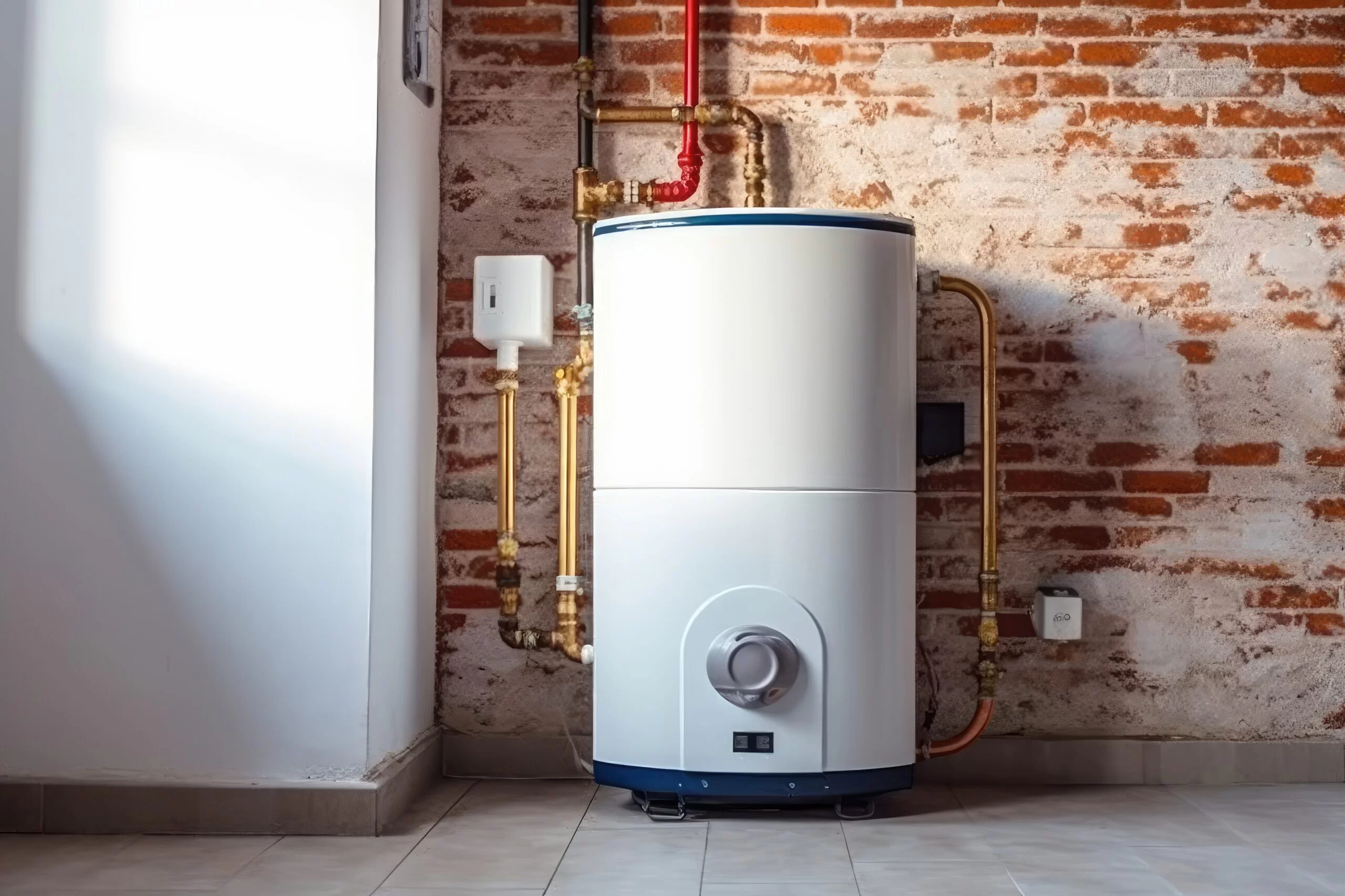
Finding water on the floor around your water heater can be alarming. But what if you look closely and can’t find an obvious leak?
Water around a water heater doesn’t always mean the tank itself is leaking. Moisture can come from a connection, valve, drain fitting, pressure relief system, condensation, or another plumbing component nearby.
The challenge is that water can travel along the floor or equipment before you notice where it actually came from.
At Arch Plumbing, we help homeowners throughout St. Louis and St. Charles County identify water heater and plumbing problems before a small issue turns into significant water damage.
Here’s what may be happening when you find water around your water heater but can’t see an obvious leak.
First, Don’t Assume the Water Heater Tank Is Leaking
When homeowners see water on the floor, the natural reaction is to assume the tank has failed.
Sometimes that is the case—but not always.
A water heater has several connections, valves, fittings, and components that can potentially release water. A small amount of moisture may also come from condensation or a nearby plumbing connection.
Before deciding that the entire water heater needs to be replaced, the source of the water needs to be identified.
1. A Small Leak at a Water Connection
The water lines connected to your heater can develop leaks over time.
A connection may only release a small amount of water, making it difficult to spot immediately. Water can travel along the pipe or the top of the water heater before eventually reaching the floor.
Look closely around:
- Cold-water inlet connections
- Hot-water outlet connections
- Pipe fittings
- Shutoff connections
- Flexible connectors
- Nearby plumbing joints
If you notice corrosion, mineral deposits, staining, or moisture around one of these areas, the connection should be inspected.
A small leak doesn’t necessarily mean the water heater itself has failed.
2. The Temperature and Pressure Relief Valve May Be Discharging Water
Water heaters are equipped with a temperature and pressure relief valve, commonly called a T&P valve.
Its purpose is to release water if temperature or pressure inside the tank becomes unsafe.
If the valve is releasing water when it shouldn’t, you may notice moisture around the heater without seeing a traditional leak from the tank.
Possible reasons include:
- A faulty relief valve
- Excessive water pressure
- Temperature-related problems
- Other pressure conditions within the plumbing system
Because the relief valve is a safety component, homeowners should not simply cap, block, or disable it to stop the water.
If you notice water coming from this area, have the system professionally evaluated.
3. The Water Heater Drain Valve May Be Dripping
Most tank-style water heaters have a drain valve near the bottom of the unit.
This valve allows water to be drained from the tank during servicing or replacement.
Over time, the valve can develop a slow drip or fail to seal completely.
Because the valve is located near the bottom of the water heater, even a small leak can result in water collecting on the floor.
Look for moisture directly around the drain valve or signs of mineral buildup below it.
A dripping drain valve may be repairable, depending on its condition and the overall condition of the water heater.
4. Condensation Can Look Like a Water Heater Leak
Sometimes the water isn’t coming from a plumbing leak at all.
Under certain conditions, condensation can form around plumbing components or the water heater.
This may happen when:
- Cold water enters the tank
- Humidity is high
- The surrounding area is cool
- There is a significant temperature difference between the water and surrounding air
Condensation is usually a smaller amount of moisture rather than a continuously increasing pool of water.
However, don’t automatically assume that all moisture is condensation. If the water keeps returning, the source should be checked.
5. Water May Be Coming From Above the Water Heater
One easy-to-miss possibility is that the water isn’t coming from the heater.
A leak from an overhead pipe, nearby fitting, ceiling, or another plumbing component can run downward and collect around the base of the water heater.
Because the heater is often located in a basement, utility room, garage, or other area containing multiple plumbing connections, determining the source can sometimes be difficult.
Check the surrounding area—not just the tank itself.
If water is appearing on top of or around the heater but the tank and its connections appear dry, a nearby plumbing leak may be responsible.
6. An Expansion Tank or Pressure-Related Component May Be Involved
Some plumbing systems use an expansion tank to help manage pressure changes caused by heated water.
If the expansion tank or its connection develops a problem, you may notice moisture around the water heater area.
Pressure-related issues can also contribute to water being discharged through components designed to protect the plumbing system.
This is one reason it’s important to look at the water heater and the surrounding plumbing as a complete system rather than assuming the tank itself is the problem.
If you notice repeated moisture around the heater, a plumber can inspect the connections and pressure-related components.
7. The Tank Itself May Be Failing
Even when you can’t see a clear hole or crack, the water heater tank can eventually develop an internal leak.
Tank failure is more concerning when you notice:
- Water repeatedly collecting around the base
- Rust or corrosion near the bottom of the tank
- Dampness that keeps returning
- A growing amount of water on the floor
- Rust-colored water
- A water heater that is significantly older
- Water appearing even when no fixtures are being used
A tank leak may not always be obvious at first.
If water continues appearing around the bottom of the heater and no external connection is responsible, the tank may need to be evaluated for replacement.
How to Tell Where the Water Is Coming From
Before calling it a water heater leak, look at when and where the water appears.
Water appears immediately after using hot water
This may point toward a connection, valve, or component that is affected when the system operates.
Water appears even when no water is being used
A continuously recurring leak deserves attention because it may involve the tank, a pressurized connection, or another plumbing component.
Water is concentrated around one fitting
A connection or valve may be the source.
Water is spread across the floor
The original source may be farther away than where the water is pooling.
Water appears around the bottom of the tank
The tank itself may be leaking, but the drain valve or another low-level component should also be checked.
These observations can help a plumber narrow down the problem, but they don’t replace a professional inspection.
Is a Small Amount of Water Around a Water Heater Normal?
It depends on where the water is coming from.
A small amount of condensation may occur under certain conditions. However, repeated or unexplained water accumulation should not simply be considered normal.
A properly functioning water heater should not routinely leave water on the floor.
If you wipe up the water and it keeps coming back, pay attention to the pattern rather than ignoring it.
The longer a leak continues, the greater the potential for damage to flooring, walls, cabinets, or other nearby materials.
What Should You Do If You Find Water Around Your Water Heater?
Start by determining whether water is actively accumulating.
If there is a significant leak, shut off the appropriate water supply if you can do so safely and contact a plumber.
For a small amount of unexplained moisture:
- Dry the area carefully.
- Check the water connections above the tank.
- Look around the drain valve.
- Check for moisture near the temperature and pressure relief valve.
- Look at nearby pipes and plumbing connections.
- Check whether the water returns after the heater operates.
- If the source remains unclear, have the water heater inspected.
Don’t remove safety components or attempt to bypass a relief valve to stop a leak.
When Should You Call a Plumber?
A small amount of moisture may not mean an immediate emergency, but certain situations require prompt attention.
Contact a professional if:
- Water continues collecting around the heater.
- You can’t identify where the water is coming from.
- The tank appears corroded.
- Water is coming from a relief valve.
- A connection continues dripping.
- The amount of water is increasing.
- The water heater is leaking from the bottom.
- You notice water damage around the unit.
- You suspect excessive water pressure.
- The water heater is old and showing multiple warning signs.
A professional can determine whether the problem calls for a repair, component replacement, or a new water heater.
Repair or Replace the Water Heater?
Finding water around your heater doesn’t automatically mean you need a new unit.
If the problem is a loose connection, valve, fitting, or another replaceable component, repairing that part may be enough.
Replacement becomes more likely when the tank itself has failed, the unit is significantly deteriorated, or continued repairs no longer make practical sense.
The right decision depends on the condition and age of the water heater, the source of the water, the cost of the repair, and the expected remaining service life.
A proper diagnosis should come before making that decision. If you’re considering replacing your unit, it can also be helpful to understand the differences between available models and options. Water Heater Pro Series vs. Signature Series: What’s the Difference? can help homeowners compare water heater choices and make a more informed decision before installation.
Why You Shouldn’t Ignore Water Around Your Water Heater
Water heaters are connected to both your home’s water supply and, depending on the type of system, other important plumbing components.
A small amount of moisture can be an early warning sign.
Ignoring it can allow a minor connection problem to become a larger leak. If the tank itself is failing, continued leakage can eventually result in substantial water damage.
The safest approach is simple:
If water keeps appearing, find out why.
Water Heater Help for St. Louis & St. Charles County Homeowners
Water around your water heater doesn’t always mean the tank has failed. The source could be a connection, drain valve, relief valve, condensation, nearby plumbing, pressure-related component, or the tank itself.
The important part is identifying the actual source before deciding whether the water heater needs repair or replacement.
Arch Plumbing is a family-owned plumbing company serving homeowners throughout St. Louis and St. Charles County. Our family has more than 60 years of master plumber experience, and Arch Plumbing has served local homeowners since 2008.
From water heater problems to residential plumbing repairs and installations, our goal is to provide reliable service, quality materials, and clean workmanship.
If you keep finding water around your water heater and can’t determine where it’s coming from, contact Arch Plumbing for professional water heater service.
Frequently Asked Questions
Why is there water around my water heater but no visible leak?
Water may be coming from a connection, drain valve, temperature and pressure relief valve, expansion tank, condensation, nearby plumbing, or the water heater tank itself. Water can also travel before pooling on the floor, making the source difficult to identify.
Is condensation around a water heater normal?
Some condensation can occur under certain temperature and humidity conditions. However, repeated or significant water accumulation should not automatically be assumed to be condensation and should be investigated.
Can a water heater leak from the bottom without a visible hole?
Yes. Water can come from the drain valve, connections, or other components near the bottom of the unit. If the tank itself has developed an internal leak, the source may also be difficult to see initially.
What should I do if my water heater is leaking?
If the leak is significant or getting worse, stop using the system and shut off the appropriate water supply if you can do so safely. Then contact a professional plumber to identify the source and determine the appropriate repair.
Does water around my water heater mean I need a new water heater?
Not necessarily. A leaking connection, valve, or other component may be repairable. If the tank itself has failed or is severely deteriorated, replacement may be the better option.
How can I tell if my water heater tank is leaking?
Repeated water around the base, corrosion, rust, or moisture that returns even when connections and valves appear dry can indicate tank failure. A plumber can inspect the unit and determine whether the tank itself is leaking.
Need Help With a Water Heater Problem?
Don’t ignore unexplained water around your water heater.
Arch Plumbing provides water heater installation and residential plumbing services throughout St. Louis and St. Charles County.
Call Arch Plumbing to schedule professional service.
Let’s Book Your Appointment
Fill out the form below and our team will contact you shortly to confirm your appointment.




