
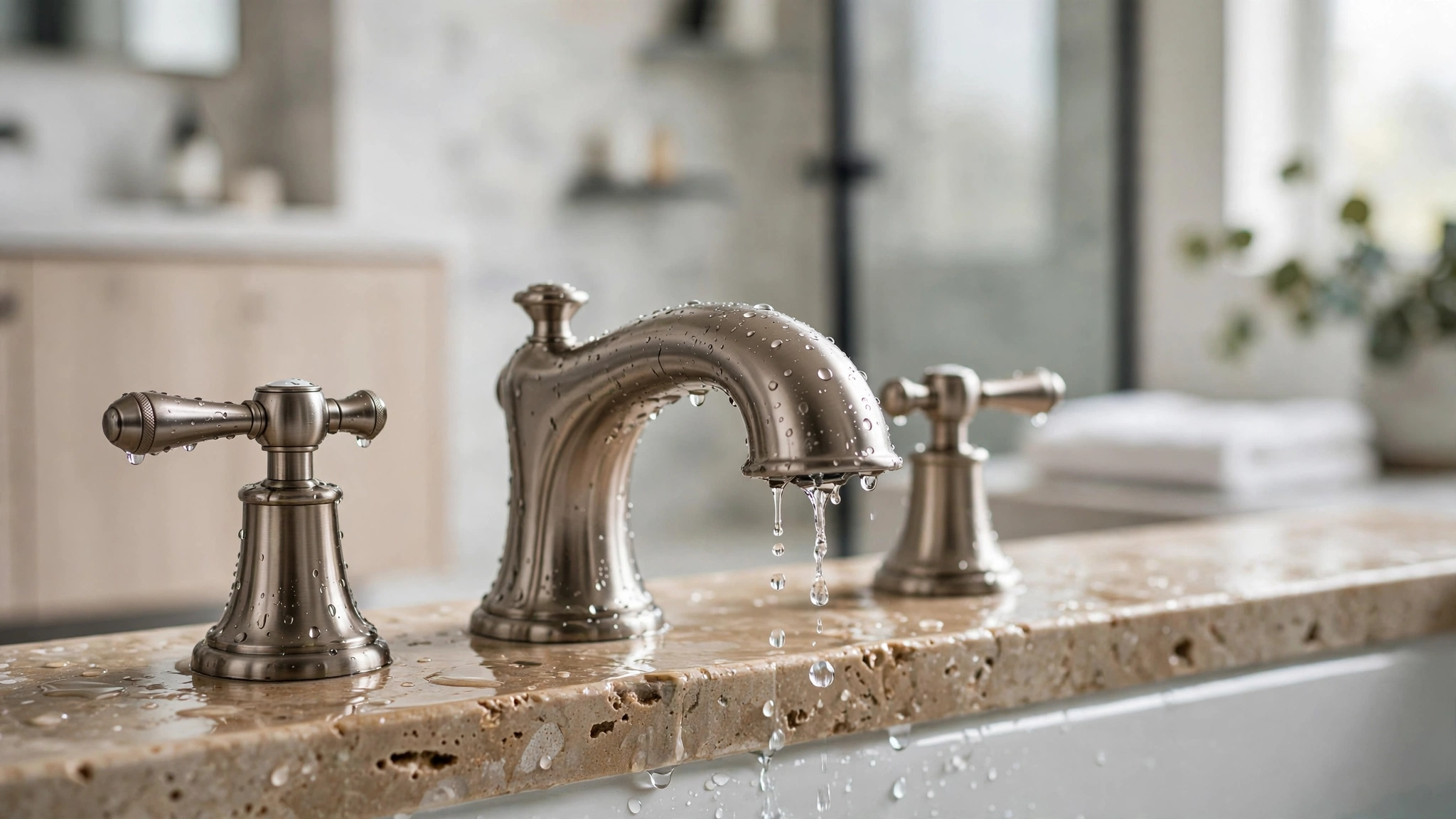
A Roman tub can make a bathroom feel more comfortable and luxurious, but a leaking faucet or a handle that no longer works properly can quickly become frustrating. Even a small drip can waste water, while leaks around the tub deck may allow moisture to reach cabinets, flooring, or other surrounding materials.
If your Roman tub faucet is leaking, the first step is to identify where the water is coming from. The source of the leak can help determine whether a repair is possible or whether a faucet component needs to be replaced.
For homeowners in St. Charles and St. Louis County, understanding these warning signs can help prevent a minor bathroom plumbing issue from becoming a more expensive repair.
1. Water Keeps Dripping From the Faucet Spout
One of the most noticeable Roman tub faucet problems is water dripping from the spout even after the handles have been turned off.
This may indicate worn internal seals, a damaged cartridge, a deteriorated valve component, or another problem within the faucet assembly. The exact cause depends on the faucet design.
What to look for:
- Water continues dripping after the faucet is shut off.
- The handles must be turned unusually hard to stop the water.
- The drip returns shortly after the faucet is turned off.
A plumber can inspect the faucet and determine whether the affected component can be serviced or whether replacement is the more practical option.
2. Water Is Leaking Around the Faucet Handle
If water appears around a Roman tub handle while the faucet is running, the problem may involve a worn seal, damaged cartridge, loose connection, or another internal component.
However, the location of the visible water does not always identify the exact source. Water can travel along the fixture and appear somewhere other than where the leak begins.
Avoid repeatedly tightening handles or forcing stiff controls. Excessive force can damage the fixture or make the problem worse.
A professional inspection can help identify the source before unnecessary parts are replaced.
3. Water Is Pooling Around the Tub Deck
Water around the base of a Roman tub faucet deserves particular attention. Unlike a typical wall-mounted bathtub faucet, a Roman tub faucet is commonly installed through the horizontal deck surrounding the tub.
Depending on the fixture and installation, water may escape from a connection beneath the deck, a faucet mounting area, or a nearby plumbing component.
Look for:
- Repeated puddles around the faucet base.
- Dampness in an accessible cabinet or service area beneath the tub.
- Discoloration, swelling, or deterioration of nearby materials.
- Water that appears even when the surrounding surface has been wiped dry.
Not every puddle indicates a plumbing leak; splashing and water left on the deck can produce similar signs. If the area becomes wet repeatedly without an obvious explanation, have the fixture and accessible connections inspected.
Important: If water is reaching the subfloor, ceiling below, or nearby electrical equipment, stop using the tub and address the leak promptly. Shut off the water supply if it is safe and accessible.
5. The Faucet Handles Are Stiff, Loose, or Difficult to Operate
Roman tub handles should operate without excessive force. If a handle becomes stiff, loose, or inconsistent, the problem could involve worn internal components, mineral deposits, a damaged cartridge, or an issue with the handle assembly.
Do not force a handle that will not turn normally. Doing so can damage the control mechanism or make it harder to shut off the water.
Depending on the fixture, the solution may be a component repair or a replacement of part or all of the faucet assembly. Identifying the faucet make and model can help establish which parts are compatible.
Should You Repair or Replace a Roman Tub Faucet?
The right solution depends on the condition of the faucet, the location of the leak, the availability of replacement parts, and the accessibility of the plumbing.
A repair may be appropriate when:
- The faucet body is in good condition.
- The problem is traced to a replaceable internal component.
- Compatible parts are available.
- The surrounding plumbing connections remain sound.
Replacement may be worth considering when:
- The faucet body is cracked, corroded, or damaged.
- Compatible repair parts are unavailable.
- Leaks continue after appropriate repairs.
- You are remodeling the bathroom or changing the fixture style.
- Accessing the existing plumbing makes a larger replacement project more practical.
A plumber can assess the existing fixture and explain the available options before work begins. Replacing a faucet does not automatically require replacing the tub, but access requirements and the existing installation can affect the scope of the work.
What Makes Roman Tub Faucet Replacement Different?
Roman tub faucets can be more complicated to service than some standard bathtub fixtures because the faucet and handles are mounted through the tub deck or surrounding platform.
Depending on the design, accessing the connections may require working through a service panel or another accessible area. In some installations, access is limited, making diagnosis and planning particularly important.
Before selecting a replacement fixture, consider:
- Mounting configuration: The new faucet must suit the existing deck openings and installation arrangement, or modifications may be necessary.
- Valve compatibility: The faucet and its control components must be compatible with the intended installation.
- Water supply connections: Existing connections should be evaluated for condition and compatibility.
- Access for future repairs: Service access should be considered when the surrounding structure permits it.
- Leak prevention: Connections must be installed and tested appropriately to reduce the risk of concealed water damage.
If the faucet is being replaced as part of a larger bathroom project, it may be useful to evaluate the tub’s plumbing and the accessibility of its connections at the same time.
When Should You Call a Plumber?
A minor drip may seem manageable, but persistent leaks can damage surrounding materials and conceal problems beneath the tub deck.
Consider professional plumbing service if:
- The faucet continues dripping when turned off.
- Water appears around the handles or faucet base.
- You cannot identify the source of a recurring leak.
- The handles no longer control water flow reliably.
- The faucet needs replacement or its connections are difficult to access.
- You suspect a leak beneath or behind the tub.
If the leak is substantial, stop using the fixture and shut off its water supply if you can do so safely. Prompt attention is particularly important when water is entering concealed spaces.
Need Help With Your Roman Tub Plumbing?
A leaking or malfunctioning Roman tub faucet may need a straightforward component repair, a new fixture, or a more involved plumbing assessment. The best next step is to identify the source of the problem before deciding which solution is appropriate.
Arch Plumbing provides plumbing services for homeowners in St. Charles and St. Louis County, including Roman tub installation. If your existing fixture needs replacement or you are planning a bathroom upgrade, our team can help assess the plumbing requirements and discuss the next steps.
Ready to address your Roman tub plumbing? Contact Arch Plumbing to discuss your project and make an appointment.
Call (636) 299-3854 or visit our Roman Tub Installation service page to learn more.
Frequently Asked Questions
Why does my Roman tub faucet drip after I turn it off?
A persistent drip can result from worn seals, a damaged cartridge, or another internal valve problem. The specific cause depends on the faucet design and should be identified before replacing parts.
Can a Roman tub faucet be replaced without replacing the tub?
In many cases, yes. However, the feasibility depends on the existing faucet configuration, access to the connections, deck openings, and compatibility of the replacement fixture.
Why is water leaking around the base of my Roman tub faucet?
Possible causes include a leaking connection beneath the deck, a mounting-related issue, or water escaping from another nearby component. Water may travel before becoming visible, so the exact source should be confirmed.
Is a leaking Roman tub faucet an emergency?
A small, contained drip may not require emergency service, but it should not be ignored. Significant leakage, water entering concealed spaces, or an inability to stop the flow requires prompt attention.
When should I replace my Roman tub faucet instead of repairing it?
Replacement may be appropriate when the fixture is damaged, repair parts are unavailable, leaks persist after proper repairs, or you are upgrading the bathroom. A plumber can help evaluate the most practical option.
Let’s Book Your Appointment
Fill out the form below and our team will contact you shortly to confirm your appointment.


