
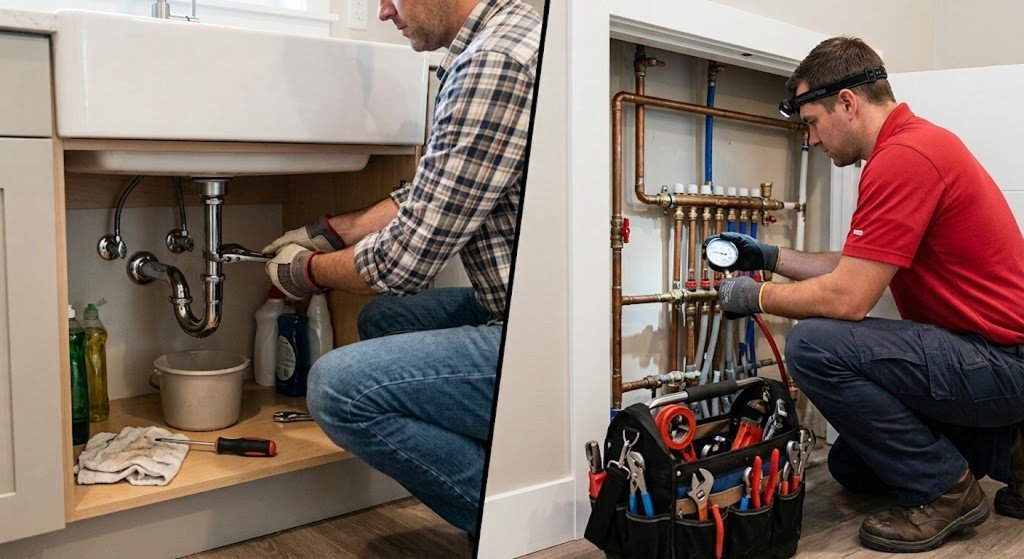
When a plumbing problem happens at home, many homeowners immediately consider fixing it themselves. A quick online tutorial, a trip to the hardware store, and a few basic tools can make some repairs seem simple.
And in some situations, a homeowner may be able to handle a minor issue safely.
But plumbing systems are more connected and complicated than they often appear. What starts as a small DIY repair can sometimes lead to a larger leak, water damage, damaged pipes, or an even more expensive repair.
So, when is it okay to try a DIY plumbing fix, and when is calling a professional plumber the safer choice?
Here’s what homeowners should know.
Some Plumbing Problems Are Simple—Others Aren’t
There is a big difference between handling a basic maintenance task and attempting to repair a problem you don’t fully understand.
For example, replacing a worn washer or clearing hair from an easily accessible drain may be manageable for some homeowners.
However, problems involving hidden pipes, water pressure, sewer lines, major leaks, gas connections, or plumbing inside walls can carry much greater risks.
The challenge is that the visible symptom isn’t always the actual problem.
A dripping fixture may have a simple cause—or it could be connected to a failing valve or damaged plumbing connection. A slow drain might be caused by hair near the drain opening, but recurring backups could indicate a problem deeper in the plumbing system.
Before starting a DIY repair, it’s important to consider what could happen if the diagnosis is wrong.
DIY Plumbing Repairs That Can Become Risky
1. Trying to Fix a Leak Without Finding the Source
Finding water under a sink or on the floor doesn’t always mean the visible pipe is where the problem started.
Water can travel along pipes, walls, flooring, and other surfaces before becoming noticeable.
Replacing a fitting without identifying the actual source could leave the leak active behind a wall or beneath the floor.
This is especially concerning with hidden leaks, which can continue causing damage long before homeowners see the full extent of the problem.
If you’re unsure where the water is coming from, read our guide on How to Tell if a Plumbing Leak Is Behind Your Wall to learn about warning signs that may indicate a hidden plumbing problem.
2. Using Too Much Force on Plumbing Connections
One common DIY mistake is assuming that tighter is always better.
Over-tightening plumbing connections can damage fittings, crack components, strip threads, or create new leaks.
Older plumbing systems can be particularly vulnerable because pipes and connections may already be weakened by corrosion or wear.
A repair that initially seems successful can sometimes fail later if the plumbing components were damaged during installation.
Professional plumbers understand how different plumbing materials and connections should be handled.
3. Relying Too Heavily on Chemical Drain Cleaners
When a drain stops flowing, chemical drain cleaners can seem like the fastest solution.
However, recurring clogs aren’t always caused by something a chemical product can safely remove.
Repeated use of harsh products may also create problems depending on the plumbing materials and the condition of the pipes.
More importantly, chemical cleaners may temporarily improve drainage without addressing why the clog keeps returning.
If you’re dealing with recurring slow drains, standing water, or multiple fixtures backing up, professional Drain Cleaning & Clog Removal can help identify and address the underlying problem.
4. Attempting to Repair Pipes Inside Walls
Opening a wall and finding a pipe doesn’t necessarily mean the repair will be straightforward.
Hidden plumbing repairs may involve:
- Water supply lines
- Drain pipes
- Pipe fittings
- Shut-off valves
- Water pressure issues
- Older plumbing materials
An incorrect repair can result in a leak that remains hidden after the wall is closed again.
If plumbing work involves cutting into walls, replacing damaged pipes, or modifying water lines, professional service is often the safer option.
5. Ignoring the Main Water Shut-Off Valve
Before attempting many plumbing repairs, homeowners should know where the home’s main water shut-off valve is located.
If something goes wrong during a DIY repair, being able to stop the water quickly can make a major difference.
Unfortunately, some homeowners discover that their shut-off valve is difficult to operate only when an emergency happens.
Testing and maintaining your shut-off valve is an important part of protecting your home. If your valve is damaged, corroded, or no longer operating properly, professional service may be needed.
6. Trying to Fix Recurring Toilet Problems
A toilet that occasionally runs may have a relatively simple issue.
But recurring toilet clogs, frequent backups, leaks around the base, or repeated overflows may point to a larger plumbing problem.
Continuing to replace the same internal parts without understanding why the problem keeps happening can waste time and money.
If the issue keeps returning, professional diagnosis can help determine whether the problem involves the toilet itself or another part of the plumbing system.
7. Attempting Major Water Heater Repairs
Water heaters involve water connections and, depending on the system, additional components that require careful handling.
Problems such as water leaking around the unit, inconsistent hot water, unusual noises, or visible corrosion shouldn’t automatically be treated as DIY projects.
Incorrect repairs can create additional damage or leave the underlying issue unresolved.
A professional plumber can evaluate whether the problem can be repaired or whether replacement may be the better long-term solution.
The Biggest DIY Plumbing Risk: Misdiagnosing the Problem
The biggest risk isn’t always the repair itself.
It’s fixing the wrong thing.
For example:
- A homeowner clears a drain, but the actual problem is deeper in the system.
- A visible leak is repaired while a hidden leak continues behind a wall.
- A fixture is replaced when water pressure is causing the real problem.
- A toilet is repaired repeatedly when the issue involves the drain line.
- A temporary solution hides a problem that continues getting worse.
Professional plumbing service involves more than replacing a damaged part.
Proper diagnosis helps determine what caused the problem and what needs to be done to prevent it from happening again.
When DIY Plumbing Can Cost More Than Calling a Professional
DIY repairs are often attempted to save money.
But a mistake can sometimes create additional expenses.
A small plumbing problem can become more costly if it results in:
- Water damage
- Damaged flooring
- Damaged cabinets
- Mold or moisture problems
- Broken pipes or fittings
- Repeated repair attempts
- Damage behind walls
- Emergency plumbing service
Sometimes the most cost-effective option is addressing the problem correctly the first time.
For more information about common issues homeowners shouldn’t ignore, see our guide on 10 Plumbing Problems Every Homeowner Should Never Ignore.
When Should You Call a Professional Plumber?
It’s generally best to contact a professional when you are dealing with:
Active Water Leaks
Especially when water is spreading, causing damage, or coming from an unknown location.
Multiple Clogged Drains
This can indicate a problem beyond a single fixture.
Sewer Backups
Sewage or wastewater backing up into your home requires professional attention.
Pipes Inside Walls or Floors
Hidden plumbing repairs can be difficult to diagnose and access correctly.
Major Water Pressure Changes
Sudden or significant changes in water pressure can indicate an underlying plumbing problem.
Repeated Plumbing Problems
If you've repaired the same issue several times, the underlying cause may not have been addressed.
Water Heater Problems
Leaks, corrosion, inconsistent hot water, and other significant water heater concerns should be professionally evaluated.
Plumbing Emergencies
Burst pipes, major leaks, flooding, and overflowing fixtures can cause property damage quickly.
DIY vs. Professional Plumbing Repair: Making the Right Decision
DIY maintenance can be useful for homeowners who understand their limits.
Simple tasks such as keeping drains clear of debris, checking for visible leaks, and monitoring plumbing fixtures can help homeowners identify problems early.
However, when a repair involves hidden pipes, significant water damage, recurring problems, major plumbing components, or uncertainty about the cause, professional help is often the safer choice.
The goal isn’t simply to get the water flowing again.
It’s to make sure the problem is actually solved.
Trust Arch Plumbing for Professional Plumbing Repairs
At Arch Plumbing, we help homeowners throughout St. Charles County and the St. Louis Metro Area diagnose and repair plumbing problems before they become larger and more expensive.
Whether you’re dealing with a persistent leak, recurring drain clog, damaged pipe, plumbing fixture problem, or another issue you don’t feel comfortable handling yourself, our team can help.
As a family-owned plumbing company with over 60 years of master plumber experience in the family, we focus on honest recommendations, quality workmanship, and solutions designed around your home’s needs.
When you’re not sure whether a plumbing repair is safe to handle yourself, getting professional advice can help protect both your plumbing system and your home.
Frequently Asked Questions
What plumbing repairs can homeowners safely do themselves?
Some homeowners may be comfortable handling basic maintenance tasks, such as cleaning visible debris from drains or checking for obvious leaks. However, the difficulty and risk depend on the specific plumbing system and problem.
Can a DIY plumbing repair cause water damage?
Yes. Incorrectly installed fittings, damaged pipes, or repairs that fail after installation can allow water to escape and cause damage to surrounding areas.
Should I use chemical drain cleaner for a clogged drain?
Chemical drain cleaners may not address the underlying cause of recurring clogs. For persistent or severe drainage problems, professional evaluation is often a better option.
When should I stop trying to fix a plumbing problem myself?
If the problem keeps returning, you don’t know what is causing it, multiple fixtures are affected, or the repair involves hidden pipes or significant water flow, it’s a good time to contact a professional plumber.
Is it worth hiring a plumber for a small problem?
It depends on the issue. A professional can help determine whether the problem is truly minor or whether it may be an early sign of a larger plumbing concern.
Don’t Let a DIY Repair Become a Bigger Plumbing Problem
Trying to solve a plumbing issue yourself can sometimes seem like the quickest option. But when you’re unsure about the cause of the problem, guessing can lead to additional damage and more expensive repairs.
If your plumbing problem is recurring, getting worse, or beyond a simple maintenance task, Arch Plumbing is here to help.
Contact Arch Plumbing today for professional plumbing repair and honest recommendations for your home.
Let’s Book Your Appointment
Fill out the form below and our team will contact you shortly to confirm your appointment.




