
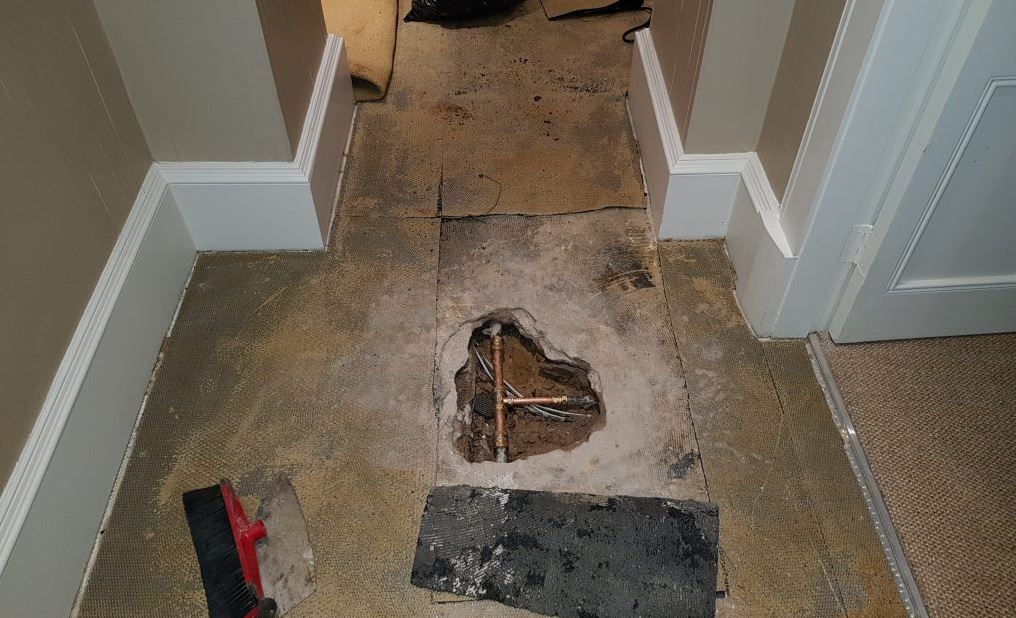
A slab leak doesn’t announce itself with a flood. It starts quietly, underneath your foundation, and by the time most homeowners notice something’s wrong, the damage has already been building for weeks or months. If you live in St. Charles County, where many homes are built on concrete slab foundations, knowing the early warning signs can save you thousands of dollars in repairs.
Here’s what to watch for, why it happens, and what to do if you think you have one.
What Is a Slab Leak?
A slab leak happens when a water or sewer pipe running underneath your home’s concrete foundation starts to leak. Since these pipes are buried beneath the slab, you can’t see them, which means the leak can go undetected for a long time. Left alone, the water can erode soil under the foundation, cause cracking, and lead to mold growth inside your walls and flooring.
Common Signs of a Slab Leak
1. Unexplained Spike in Your Water Bill
If your water bill suddenly jumps and you haven’t changed your usage, that’s often the first clue. A slab leak can waste hundreds of gallons of water a month without a single drop showing up anywhere visible.
2. The Sound of Running Water with Everything Off
Walk through your house, turn off every faucet and appliance, and listen. If you still hear water running or a faint hissing sound near the floor, there’s a good chance water is moving somewhere it shouldn’t be.
3. Warm Spots on the Floor
This one catches a lot of homeowners off guard. If a section of your flooring feels warm to the touch, especially in homes with hot water lines running through the slab, it could mean a hot water pipe is leaking beneath that spot.
4. Damp Carpet or Flooring with No Obvious Cause
Carpet that stays damp, tile that feels cool and wet, or flooring that starts to buckle or warp without any spills or plumbing fixtures nearby are all signs that water is seeping up from below.
5. Cracks in Walls or Flooring
As the soil beneath a leaking slab shifts, it can cause small cracks to appear in your foundation, walls, or floor tiles. A few hairline cracks aren’t always cause for alarm, but new cracks appearing along with any of the other signs on this list are worth investigating.
6. Mold or a Musty Smell
Persistent moisture under your home creates the perfect environment for mold. If you’re noticing a musty odor that won’t go away, especially in lower-level rooms, it may be coming from beneath the floor rather than anywhere you can easily clean.
7. Low Water Pressure
A slab leak can cause water pressure to drop throughout the house since water is escaping before it reaches your fixtures. If you’ve ruled out other causes of low pressure, a hidden leak is worth considering.
What Causes Slab Leaks in St. Charles County Homes?
A few factors make slab leaks more common in this area:
- Soil conditions – St. Charles County’s clay-heavy soil expands and contracts with moisture changes, putting extra stress on pipes underneath the slab.
- Pipe age – Many homes built decades ago still have original copper or galvanized piping, which is more prone to corrosion over time.
- Water chemistry – Mineral content in local water can gradually wear down pipe walls from the inside.
- Ground shifting – Seasonal freeze-thaw cycles can cause subtle foundation movement that stresses pipe joints.
What to Do If You Suspect a Slab Leak
If you notice one or more of these signs, the worst thing you can do is wait and see. Slab leaks only get more expensive to repair the longer they go untreated, and the foundation damage they cause is often far costlier than the plumbing repair itself.
Here’s the right approach:
- Shut off the main water supply if you suspect an active leak, to limit further damage.
- Avoid using your hot water heater until the leak is diagnosed, especially if you suspect the leak is on the hot water line.
- Call a licensed plumber who has experience with slab leak detection. Specialized equipment, like acoustic listening devices and thermal imaging, can pinpoint the exact location without tearing up your entire floor.
Why St. Charles County Homeowners Trust Arch Plumbing for Slab Leak Detection
At Arch Plumbing, we use modern leak detection equipment to find the source of a slab leak quickly and accurately, so repairs stay as minimally invasive as possible. We’ve worked on homes throughout St. Charles County, Lake St. Louis, O’Fallon, and Wentzville, and we know the soil and plumbing conditions specific to this area.
If something feels off with your water bill, your flooring, or your water pressure, don’t wait for it to get worse. A quick inspection now can save you from a major foundation repair down the road.
Frequently Asked Questions
How much does it cost to repair a slab leak?
Cost depends on the leak’s location and how it’s accessed, but most repairs range from a few hundred dollars for a simple pipe reroute to several thousand if the slab needs to be cut into. An accurate quote requires locating the leak first.
Can a slab leak cause foundation damage?
Yes. Ongoing water seepage can erode the soil supporting your foundation, leading to cracks and shifting if the leak isn’t addressed in time.
Do plumbers have to break up my floor to find a slab leak?
Not usually. Tools like acoustic leak detectors and thermal imaging let plumbers pinpoint the leak’s location with minimal disruption before any cutting is done.
Is a slab leak covered by homeowners insurance?
It depends on your policy. Many cover the cost to access and repair the leak but not the plumbing fix itself. Check with your insurance provider for specifics.
Notice any of these signs at your home? Call Arch Plumbing at (636) 299-3854 or schedule an inspection online today
Let’s Book Your Appointment
Fill out the form below and our team will contact you shortly to confirm your appointment.




