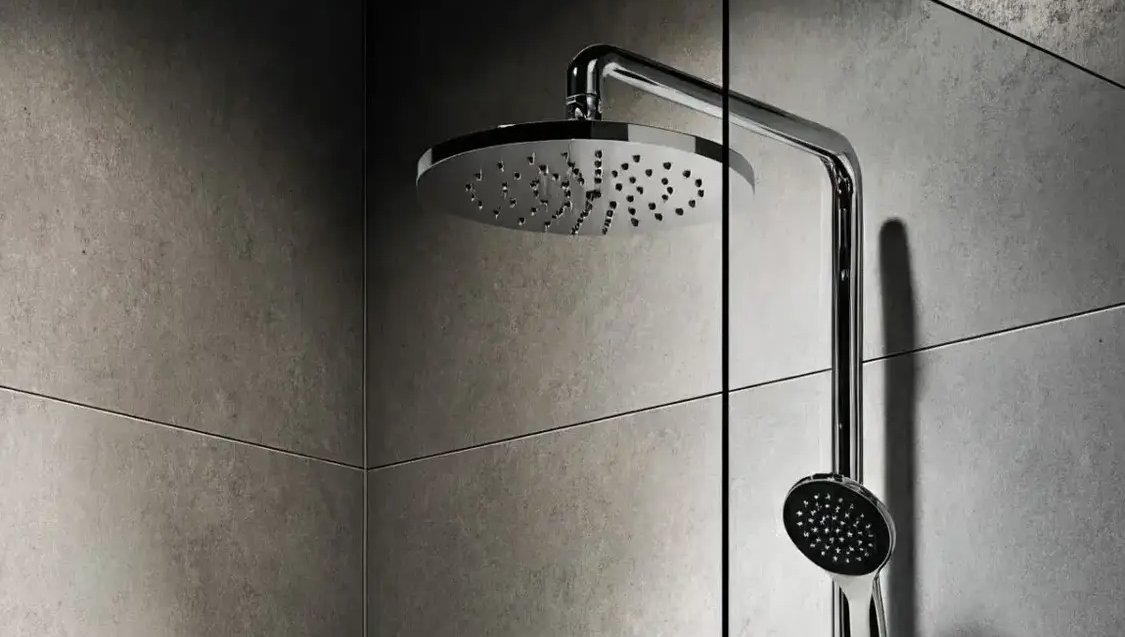
How to Remove Mineral Build-up on Shower Heads

Mineral Build-up on Shower Heads

Mineral deposits in the great outdoors can be one of the wonders of nature. Mineral deposits forming inside your shower head—not so much. All municipal water contains some amount of dissolved mineral content, usually calcium carbonate. While they’re harmless to your health, and in trace amounts actually make drinking water taste more appetizing, dissolved minerals in water tend to solidify and accumulate inside hot water fixtures like your water heater and/or your shower head.

Today’s water-efficient “low flow” shower heads are engineered to exact tolerances in order to function properly. If mineral build-up inside the shower head gradually restricts tiny water passageways and spray openings, however, low-flow begins to feel more like next-to-no-flow. It’s increasingly difficult to rinse away shampoo and soap residue and the overall shower experience is less-than-satisfactory.

Short of installing a whole-house water softener, you can’t do much about dissolved mineral content in your municipal water supply. However, you can clear mineral build-up out of your shower head with this simple procedure.

However, this simple procedure removes mineral buildup from your shower head.

  1. Unscrew the shower head from the water supply pipe. You may need a pair of pliers to loosen it.
  2. Pour enough full-strength vinegar into a bucket or other container to totally submerge the shower head. Roll it around to make sure the vinegar penetrates to all internal parts of the shower head. Be careful not to splash any vinegar into your eyes and keep the kids away.
  3. Allow the shower head to soak in the vinegar for two hours, then use an old toothbrush to scrub mineral residue off the outside of the spray head. Poke a toothpick into each of the spray openings to clear dissolved mineral accumulation.
  4. Reinstall the shower head on the pipe and tighten with pliers.
  5. Immediately turn on hot water and let it run a few moments to flush additional softened mineral deposits out of the passages inside the shower head.
  6. If mineral deposits are exceptionally heavy, place the shower head in a pan containing a 50/50 mixture of vinegar and water and heat it to a boil for 15 minutes. Pour out the water and then allow the shower head to cool before reinstalling.

Don’t put up with poor performance of your shower head—and limp, shampoo-loaded hair—due to excessive mineral build-up. You don’t need expensive commercial lime dissolvers that contain harsh caustic chemicals and require special safety measures. Vinegar, an old toothbrush, and toothpick get the job done just as well and much more inexpensively.

Arch Plumbing is located in St Charles, Missouri and has been in the service business since 2008 providing quality plumbing services.

protada final

Categories

Tags

Why Homeowners Trust Arch Plumbing for Plumbing Services in St. Charles County

Finding a plumber you can trust isn't always easy. Whether you're dealing with a leaking pipe, replacing a water heater, or upgrading kitchen fixtures, you want a professional who arrives on time, communicates clearly, and performs quality work that lasts. At Arch...

How a Missing Pressure Reducing Valve Led to a Flooded Basement in St. Charles County

Most homeowners don't think about their home's water pressure until something goes wrong. Recently, the Arch Plumbing team responded to a water heater replacement project involving a failed 75-gallon water heater. Unfortunately, the situation was much more than a...

How Long Does It Take to Install a New Faucet in St. Charles County?

If you're planning to replace a kitchen, bathroom, or utility sink faucet, one of the first questions you may have is: How long does faucet installation take? In most cases, a professional faucet installation takes between 1 and 2 hours. However, the exact timeline...

Low Water Pressure in Your Home? Common Causes in St. Charles County

If you've noticed weak water flow from your faucets or a shower that no longer feels as powerful as it once did, you're not alone. Low water pressure is one of the most common plumbing complaints among homeowners in St. Charles County. While it may seem like a minor...

Family-Owned Plumbing You Can Trust in St. Charles County

When you invite a plumber into your home, you want more than just a quick fix. You want someone honest, dependable, and experienced enough to do the job right the first time. That’s exactly what families across St. Charles County receive from Arch Plumbing. As a...

7 Signs Your Home May Need Professional Plumbing Repairs

Small plumbing problems often begin quietly before turning into expensive repairs or water damage. Many homeowners ignore early warning signs because fixtures still appear to function normally at first. However, hidden plumbing issues can continue worsening behind...

Why Is My Water Heater Leaking From the Bottom in St. Charles, MO?

Discovering water around your water heater can be alarming for any homeowner. A leaking water heater is often a sign that something inside the system is failing, and ignoring the problem can eventually lead to water damage, higher utility bills, or complete loss of...

Why Is Your Water Bill Suddenly Higher Than Normal in St. Charles MO?

A sudden increase in your water bill can be frustrating and confusing — especially if your daily water usage habits have not changed. In many cases, an unusually high water bill is a warning sign that something in your plumbing system is wasting water without you...

Is It Worth Repairing an Old Water Heater in St. Charles, MO?

A failing water heater can quickly become a major inconvenience for homeowners. From inconsistent hot water to rising utility bills, older systems often create ongoing problems that leave many people asking the same question: Is it worth repairing an old water heater,...

How Much Does It Cost to Replace a Water Heater in St. Charles, MO?

Hot water is something most homeowners in St. Charles County rely on every day — from showers and laundry to washing dishes and cleaning. When your water heater starts failing, one of the first questions you may ask is: “How much will it cost to replace it?” The...

Over 60 Years of Master Plumbers in the Family

(636) 299-3854