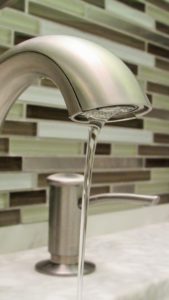
What is Causing Your Water Pressure?

Chronic low water pressure is a condition that just keeps on giving—annoyance. Fixtures like shower heads don’t rinse properly when water pressure drops below their design specs. It can seem like forever for a toilet tank to refill. Waiting for washing machine cycles to finish builds patience and character. Low water pressure may be limited to just one part of the home or only a single fixture. Or, it may be a whole-house phenomenon.

A qualified plumber can attach a meter to check your water pressure. There’s no exact, specific reading officially designated as “Approved.” Household water pressure may range anywhere from about 40 psi (pounds per square inch) up to as high as 80 psi. A lot depends on the pressure of water supplied by your municipal water utility. However, it’s generally accepted that once pressure drops into the 30s, you’ve reached the tipping point where minor inconvenience is soon to be followed by ongoing exasperation.


Here are three probable causes of low water pressure and potential cures:

  • Main shutoff valve not fully open. It happens. Someone turns off the household water supply at the main shutoff valve for some reason, then doesn’t open it all the way afterwards. Those valves can be sticky and stubborn to turn, so it’s not surprising. Check the valve and see if it can be opened any further. But don’t force it. Have a plumber check it out, particularly if you know the valve was closed and opened in the recent past.


  • Pressure regulator maladjusted or defective. The municipal water pressure coming straight off the main line in the street is usually way too high for household plumbing. A regulator valve located in or near your water meter reduces municipal pressure down to safe levels. If someone made a DIY adjustment to the pressure regulator valve in the past—or if the valve is no longer functioning properly—it could be reducing indoor water pressure excessively. A plumber can check the valve for proper function, and adjust or replace as necessary.


  • Mineral deposit accumulation.  Mineral content in municipal water (mostly calcium carbonate) may slowly accumulate inside water supply lines over the years, gradually constricting flow and reducing pressure. Re-piping supply lines is generally the only remedy if the problem extends to the whole house. If the water pressure is limited to just one specific fixture, however, replacing a single supply line may resolve the situation.


Arch Plumbing is located in St.Charles, Missouri and has been in the service business since 2008 providing quality plumbing services.
protada final

Categories

Tags

Low Water Pressure in Your Home? Common Causes in St. Charles County

If you've noticed weak water flow from your faucets or a shower that no longer feels as powerful as it once did, you're not alone. Low water pressure is one of the most common plumbing complaints among homeowners in St. Charles County. While it may seem like a minor...

Family-Owned Plumbing You Can Trust in St. Charles County

When you invite a plumber into your home, you want more than just a quick fix. You want someone honest, dependable, and experienced enough to do the job right the first time. That’s exactly what families across St. Charles County receive from Arch Plumbing. As a...

7 Signs Your Home May Need Professional Plumbing Repairs

Small plumbing problems often begin quietly before turning into expensive repairs or water damage. Many homeowners ignore early warning signs because fixtures still appear to function normally at first. However, hidden plumbing issues can continue worsening behind...

Why Is My Water Heater Leaking From the Bottom in St. Charles, MO?

Discovering water around your water heater can be alarming for any homeowner. A leaking water heater is often a sign that something inside the system is failing, and ignoring the problem can eventually lead to water damage, higher utility bills, or complete loss of...

Why Is Your Water Bill Suddenly Higher Than Normal in St. Charles MO?

A sudden increase in your water bill can be frustrating and confusing — especially if your daily water usage habits have not changed. In many cases, an unusually high water bill is a warning sign that something in your plumbing system is wasting water without you...

Is It Worth Repairing an Old Water Heater in St. Charles, MO?

A failing water heater can quickly become a major inconvenience for homeowners. From inconsistent hot water to rising utility bills, older systems often create ongoing problems that leave many people asking the same question: Is it worth repairing an old water heater,...

How Much Does It Cost to Replace a Water Heater in St. Charles, MO?

Hot water is something most homeowners in St. Charles County rely on every day — from showers and laundry to washing dishes and cleaning. When your water heater starts failing, one of the first questions you may ask is: “How much will it cost to replace it?” The...

Why Expansion Tanks Matter for Water Heater Safety in St. Charles, MO

Many homeowners focus on the water heater itself during installation or replacement, but several important safety components also help protect the plumbing system. One of the most important is the expansion tank. Expansion tanks play a major role in controlling water...

Why Proper Water Heater Installation Matters in St. Charles, MO

Installing a new water heater is not just about replacing old equipment. Proper installation plays a major role in the safety, efficiency, and long-term performance of your home’s plumbing system. From gas line connections to expansion tanks and safety components,...

Water Leak Under Slab in St. Peters MO: Signs & Immediate Actions

A water leak under your home’s concrete slab is not a plumbing problem to ignore. In many cases, homeowners in St. Peters first notice small warning signs—higher water bills, warm spots on the floor, or unexplained moisture—before the issue turns into major property...

Over 60 Years of Master Plumbers in the Family

(636) 299-3854
